

Close Menu

    Subscribe to Updates

    Get the latest creative news from FooBar about art, design and business.

    What's Hot

    AMTEX 2026 Show Supplement

    July 24, 2026

    Hybrid Manufacturing Where Additive Meets Subtractive

    July 23, 2026

    How Advanced Metalworking Fluids Are Shaping the Future of Precision Manufacturing

    July 23, 2026
    Facebook X (Twitter) Instagram
    • About Us
    • Contact US
    • Advertise
    • Subscribe Magazine
    Publications Media Kit
    Facebook Instagram YouTube LinkedIn WhatsApp X (Twitter)
    Machine Tools World | Machine Tools Industry News | CNC Machine Manufacturers | Indian Manufacturing MagazineMachine Tools World | Machine Tools Industry News | CNC Machine Manufacturers | Indian Manufacturing Magazine
    Takasu
    • HOME
    • NEWS
      • Global Market
      • Latest News
      • Product Updates
    • MACHINING
      • CNC Machines
      • Cutting Tools
      • Metal Cutting
      • Metal Forming
      • EDM
      • Grinding
      • Die & Mould
      • Metalworking Fluids
    • AUTOMATION
      • Smart Automation
      • CAD/CAM
      • Machine Safety
    • METROLOGY
      • Metrology
      • Inspection Systems
      • Quality Control
    • INSIGHTS
      • People in Focus
      • Case Studies
      • Opinion
      • Company Profiles
      • Tech Innovations
      • Blogs
    • EVENTS
      • Event Coverage
      • Webinars
    • DIGITAL MAGAZINE
    Machine Tools World | Machine Tools Industry News | CNC Machine Manufacturers | Indian Manufacturing MagazineMachine Tools World | Machine Tools Industry News | CNC Machine Manufacturers | Indian Manufacturing Magazine
    Home - Cutting Tools - What are the benefits of laser cladding?
    Cutting Tools

    What are the benefits of laser cladding?

    MTW Editorial TeamBy MTW Editorial TeamMarch 22, 2018Updated:June 16, 2026No Comments5 Views
    Facebook Twitter Pinterest LinkedIn WhatsApp Reddit Tumblr Email
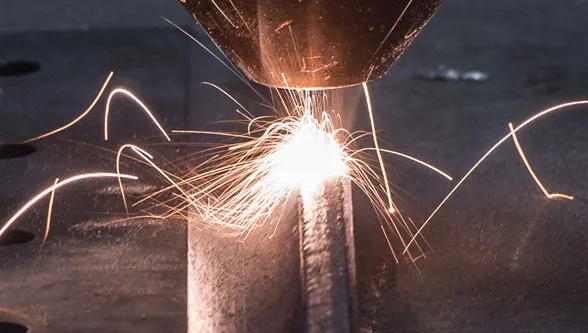
    What are the benefits of laser cladding
    Share
    Facebook Twitter LinkedIn Pinterest Email

    The idea of cladding is nothing new; however, laser cladding technologies have seen a significant boost in reliability and efficiency as of late.

    Cladding, if you didn’t know, is the process for improving the finish or surface of an object, part, or item that has generally been worn, through extended use. The best way to think of it is as a more aesthetic and functional form of refurbishment or revision. A new surface layer is created on top of the base material, giving it a new or fresh finished look.

    This is different from a process known as surface hardening, which involves revamping the surface layer through a substrate, albeit in a thinner form factor.

    Cladding essentially relies on the use of new forms of material to the surface to refinish an item. Because of this, there are varying types of materials that can be laid during the process, each with their own properties and characteristics. For example, one material might offer better quality and durability as opposed to reasonable costs and cladding speed.

    Traditional Cladding vs. Laser Cladding

    For traditional cladding processes, methods such as thermal spraying and arc welding are commonly used. They are considered more traditional and acceptable forms of welding, though please bear in mind that doesn’t necessarily mean they are better or more reliable.

    Gas tungsten arc welding or GTAW and submerged arc welding SAW are some great examples of this. During the process, an arc is produced to melt the surface or base material making it more malleable. The clad or surface material is then added—usually in wire or powder form—and melted by the arc, thus creating the new, smooth and revised surface.

    Thermal spraying works remarkably similarly to this process, with heat applied to spread and mesh the new surface layer to the item.

    Laser-based cladding processes are often much improved over the more traditional forms of cladding. The clad materials are usually applied in the same way however, they are meshed to the item or surface using a high power direct diode laser. The laser emitter generally has a much more precise and capable beam, well suited to metalworking and rapid processing techniques.

    Electron beam welding is another form of the process that relies on the reduction of ambient pressure, allowing electrons—hence the electron in the name—to be more tightly controlled. It’s outside the scope of this guide, yet worth mentioning to anyone considering laser cladding resurface methods.

    Laser Cladding Advantages

    Compared to arc welding and thermal spray methods, laser cladding processes deliver lower heat distortion, reduced dilation, low porosity levels, and better surface uniformity for the new surface layer, obviously. Collectively, this creates a more durable, and more market-ready surface than the previous cladding methods. As a result, there’s little to no need for post-processing after the new surface is created reducing both costs and time associated with cladding techniques.

    Furthermore, the precision and high quench rate of diode lasers mean that the surface material is spread using a much finer and reliable grain structure. This translates to better corrosion resistance for the new surface, making the revised component more reliable.

    Regarding metalwork, metal-based clad materials can be produced using a diode laser with minimal cracking and delamination; two drawbacks of metallurgical and mechanically bonded coatings.

    All of this, combined with the speed and precision of laser cladding makes it a truly competitive solution in comparison to traditional arc welding and thermal spray methods. Laser cladding can be used for just about any form of application that traditional cladding can be used for, including the use of metal and mechanical-based materials.

    In metalwork especially, laser cladding can be used to improve and deliver more capable surfaces that are corrosion, wear and impact resistant. That alone makes the process worth its weight in gold, simply because the new surface of the item you’re refinishing must be durable and reliable, especially in regard to metal items. The result is a strictly-bonded, virtually pure coating that is as reliable—if not more so— than the base surface.

    Article by —

    Megan Ray Nichols
    Freelance Science Writer
    nicholsrmegan@gmail.com
    www.schooledbyscience.com/about

    Post Views: 267
    Laser Cladding Megan Ray Nichols
    Share. Facebook Twitter Pinterest LinkedIn Tumblr Telegram Email
    MTW Editorial Team

      Related Posts

      Workholding Devices and Productivity

      June 30, 2026

      When Microns Matter Laser Micromachining in Medtech

      June 30, 2026

      Air Turbine Tools Faster Finishes, Smarter Spindles Unlocking the Full Potential of Five-Axis Machining with High-Speed Spindles

      May 29, 2026
      Leave A Reply Cancel Reply

      Top Posts

      Machine Tools World August 2025

      August 25, 20252,468

      3D Printing: India’s Next Manufacturing Frontier

      June 14, 2025143

      Vertical and Horizontal Milling Machines: Key Points of Difference

      August 7, 2021192

      Gravity Die Casting and the Importance of Die Coats

      June 29, 202398
      Don't Miss
      Event Coverage

       B2B World Summit & Awards 2026 in Pune

      By MTW Editorial TeamJune 19, 20266

      Artificial intelligence has swiftly progressed beyond pilot projects and proof-of-concept discussions. AI-led go-to-market strategies, revenue…

      LIVE from INTEC 2026 | CODISSIA, Coimbatore

      June 19, 2026

      GMT Engineers Showcases Advanced Laser Cutting Solutions for Smart Manufacturing

      June 15, 2026

      FFG Showcases Advanced CNC Machining Solutions for the Next Generationof Manufacturing

      June 13, 2026
      Stay In Touch
      • Facebook
      • Twitter
      • Pinterest
      • Instagram
      • YouTube
      • Vimeo

      Subscribe to Updates

      Get the latest creative news from SmartMag about art & design.

      About Us
      About Us

      MACHINE TOOLS WORLD magazine is a monthly machine tool industry magazine in India since from last 10 years, catering to Indian & global machine tools, CNC machine manufacturers, Cutting tools, Metal Forming Machine Manufacturers, CAD-CAM, Metrology, Lubricant, Grinding Machine Players.

      Facebook X (Twitter) Instagram YouTube LinkedIn WhatsApp
      Our Picks

      How Advanced Metalworking Fluids Are Shaping the Future of Precision Manufacturing

      July 23, 2026

      The Rise of Multi-Tasking Machines for Productivity

      July 23, 2026

      Micromachining and Its Industrial Applications

      July 23, 2026

      Subscribe to Updates

      Get the latest news, product insights, and expert opinions from the world of machine tools and manufacturing, delivered straight to your inbox.

      © 2026 MachineToolsWorld.
      • Terms & Conditions
      • Privacy Policy
      • Disclaimer Policy

      Type above and press Enter to search. Press Esc to cancel.

      Prisma Banner