

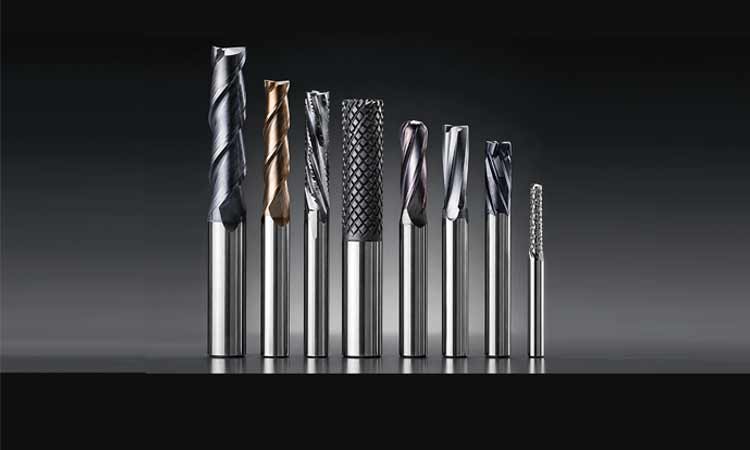
The performance of every machining operation depends largely on one critical element—the cutting tool. Whether turning, milling, drilling, boring, or threading, the cutting tool determines productivity, dimensional accuracy, surface finish, and overall manufacturing efficiency. As industries demand faster machining, tighter tolerances, and the ability to process increasingly difficult materials, cutting tool materials have undergone remarkable evolution over the past century. From simple carbon steel tools to today’s ultra-hard ceramics, cubic boron nitride (CBN), polycrystalline diamond (PCD), and nano-coated carbides, advances in cutting tool materials have continuously redefined the capabilities of modern manufacturing. Today, cutting tools are highly engineered products that combine sophisticated substrate materials, advanced coatings, optimized geometries, and precision manufacturing techniques. Their evolution has played a pivotal role in enabling high-speed machining, Industry 4.0, and the production of components for aerospace, automotive, medical, defence, electronics, and renewable energy industries.
The Early Years: Carbon Tool Steel
The earliest machine tools relied on carbon tool steels, which offered reasonable hardness at room temperature and were relatively easy to manufacture. However, their cutting performance was limited because they rapidly lost hardness at elevated temperatures.
Machining speeds were therefore relatively low, restricting productivity. As industrial production expanded during the late nineteenth century, manufacturers sought more durable cutting materials capable of withstanding higher cutting temperatures.
The Breakthrough of High-Speed Steel
A major milestone came with the development of High-Speed Steel (HSS) in the early twentieth century. HSS retained its hardness even at temperatures approaching 600°C, allowing significantly higher cutting speeds than carbon steel.
Containing alloying elements such as tungsten, molybdenum, chromium, vanadium, and cobalt, HSS provided an excellent combination of hardness, toughness, and wear resistance.
Even today, HSS remains widely used for drills, reamers, taps, end mills, broaches, and form tools, particularly in applications requiring high toughness and resistance to interrupted cutting.
Cemented Carbides Revolutionize Machining
The introduction of cemented carbide tools transformed metal cutting more dramatically than any previous development.
Produced by sintering tungsten carbide particles with a cobalt binder, carbide tools offered exceptional hardness and wear resistance while maintaining cutting performance at temperatures exceeding 800°C.
Compared with HSS, carbide tools enabled machining speeds several times higher, significantly increasing productivity.
Today, carbide remains the dominant cutting tool material for CNC machining, with a wide range of grades optimized for steel, cast iron, stainless steel, non-ferrous metals, and high-temperature alloys.
Coated Carbides Enhance Performance
The next major leap came with the introduction of coated carbide inserts.
Advanced coating technologies such as Chemical Vapour Deposition (CVD) and Physical Vapour Deposition (PVD) deposit ultra-thin layers of wear-resistant materials onto carbide substrates.
Common coatings include:
- Titanium Nitride (TiN)
- Titanium Carbonitride (TiCN)
- Titanium Aluminium Nitride (TiAlN)
- Aluminium Chromium Nitride (AlCrN)
- Aluminium Oxide (Al₂O₃)
- Multi-layer nano-composite coatings
These coatings reduce friction, improve heat resistance, minimize built-up edge formation, and significantly extend tool life.
Modern multi-layer coatings combine several materials to provide outstanding resistance to abrasion, oxidation, and thermal cracking, making them indispensable in high-speed machining.
Ceramic Cutting Tools
As aerospace and automotive industries began machining harder materials at increasingly higher speeds, ceramic cutting tools emerged as another significant innovation.
Manufactured from aluminium oxide, silicon nitride, or mixed ceramics, these tools exhibit exceptional hardness and maintain cutting performance at temperatures exceeding 1,200°C.
Ceramic tools are particularly suitable for high-speed finishing of cast iron, hardened steels, and nickel-based superalloys.
Cubic Boron Nitride (CBN)
Second only to diamond in hardness, Cubic Boron Nitride has become the preferred cutting material for machining hardened ferrous materials.
CBN tools excel in machining hardened steels, chilled cast iron, powder metallurgy components, and hard-facing materials.
Their outstanding wear resistance allows manufacturers to replace grinding operations with hard turning, reducing production time and lowering manufacturing costs.
CBN has become indispensable in bearing manufacturing, automotive transmission production, and precision engineering.
Polycrystalline Diamond (PCD)
Polycrystalline Diamond represents the ultimate cutting tool material for machining non-ferrous and abrasive materials.
PCD tools are widely used for machining:
- Aluminium alloys
- Copper
- Brass
- Graphite
- Carbon fibre composites
- Glass fibre reinforced plastics
- Ceramics
- Wood-based materials
The exceptional hardness and low friction coefficient of PCD produce outstanding surface finishes while offering extremely long tool life.
In aerospace and electric vehicle manufacturing, where lightweight aluminium and composite materials are increasingly used, PCD tooling has become essential.
Powder Metallurgy Tool Materials
Advancements in powder metallurgy have significantly enhanced cutting tool performance.
Powder Metallurgy High-Speed Steel (PM-HSS) possesses a finer and more uniform microstructure than conventional HSS, resulting in greater wear resistance, toughness, and dimensional stability.
Similarly, modern carbide grades utilize nano-sized carbide particles and improved binder compositions to achieve higher strength and improved resistance to fracture.
Smart Coatings and Nano Technology
The latest generation of cutting tools incorporates sophisticated nano-structured coatings.
These coatings consist of multiple ultra-thin layers that provide:
- Reduced cutting forces
- Lower friction
- Improved oxidation resistance
- Superior thermal stability
- Longer tool life
Self-lubricating coatings and adaptive coatings that respond to changing cutting temperatures are also under development.
Such innovations support dry machining and Minimum Quantity Lubrication (MQL), contributing to more sustainable manufacturing.
Tool Material Selection
Selecting the appropriate cutting tool material depends on several factors:
- Workpiece material
- Machining operation
- Cutting speed
- Feed rate
- Surface finish requirements
- Machine rigidity
- Production volume
- Coolant availability
For example, HSS may be ideal for low-volume or interrupted cutting operations, while coated carbide dominates general-purpose CNC machining. CBN is preferred for hardened steels, whereas PCD delivers superior performance in aluminium and composite machining.
Choosing the right combination of substrate and coating is essential for maximizing productivity and minimizing tooling costs.
Future Trends
The next generation of cutting tool materials will be driven by Industry 4.0, artificial intelligence, advanced materials science, and sustainability.
Researchers are developing nano-engineered substrates, hybrid ceramic composites, functionally graded materials, and advanced diamond-based coatings capable of machining next-generation aerospace alloys, titanium aluminides, and high-performance composites.
Additive manufacturing is also enabling the production of custom-designed cutting tools with internal coolant channels, optimized geometries, and lightweight structures.
AI-assisted tool design, digital twins, and predictive machining models will further enhance tool performance while reducing development time.
Conclusion
The evolution of cutting tool materials has been instrumental in advancing modern manufacturing. From carbon steel and High-Speed Steel to carbide, ceramics, CBN, PCD, and nano-coated substrates, each technological breakthrough has expanded the limits of machining performance, enabling higher speeds, greater precision, and improved productivity. In an increasingly competitive manufacturing landscape, the right cutting tool material is not merely a consumable—it is a strategic asset that drives efficiency, quality, and industrial excellence.