

Vacuum processing guarantees recycling rates of up to 95 percent for rare raw materials
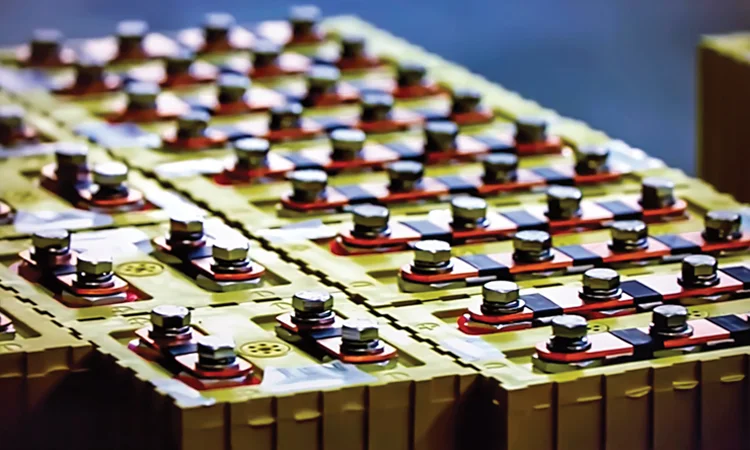
Vacuum technology is used in numerous process steps in the manufacture of lithium-ion batteries: in mixing and degassing the battery slurries, in drying the coils, in filling, and in the subsequent leak test. But vacuum technology is also indispensable in mechanical recycling, so that the cell modules can be dried in the process.
Three recycling processes:
1. Pyrometallurgy
There are three processes for the first half of recycling: First, the cell modules are processed into fractions that can then be further processed. The first is pyrometallurgy, says Sebastian Rosensträter, Application Manager of the Industrial Division at vacuum specialist Leybold. It is similar to a blast furnace process in which the battery cells are placed in a furnace. The whole thing is then heated up and burned, Rosensträter continues. The end result is an alloy of cobalt, nickel, copper, and possibly iron, which melts together. The remaining combustion slag then contains aluminum and lithium. Graphite and plastic components simply burn up. The alloy can be processed so that the raw materials cobalt, copper, and nickel can be reused. In this way, up to 50 percent by mass can be recycled.
2. Alternative pyrolysis
Pyrolysis, which takes place at lower temperatures in the absence of air, is a decomposition process in which the resulting exhaust gases must be treated. It is energy-intensive, but aluminum can be recovered, increasing the recycling rate to up to 60 percent.
3. Mechanical Recycling
In mechanical recycling, large batteries (traction batteries from cars or similar) are discharged and then dismantled. Discharging is necessary to prevent them from running away during the subsequent shredding process. In addition, it is possible to cover most of the plant’s total energy requirements from the residual charge of the batteries. The dismantled modules of larger batteries and smaller complete batteries (e.g., from smartphones, etc.) are crushed either in a nitrogen atmosphere or in a vacuum to prevent ignition of the flammable solvents from the electrolyte. These must be removed before further processing. Drying is best done using vacuum technology. So I have a closed container, supply energy and simultaneously reduce the pressure so that the whole process is energy-efficient at lower temperatures and can dry safely, summarizes Sebastian Rosensträter. If the system is sealed, ignition cannot occur. In the vacuum, the electrolyte vapor is extracted and can then condense in front of or behind the vacuum pumps and be reused.
Robust vacuum pumps are necessary
One challenge in vacuum drying is the potentially flammable solvent vapors. Users need pumps that can handle condensable, aggressive vapors. Solvents that condense in the pumps must not cause any problems during compression. A well-functioning shaft seal is necessary to prevent process gases from entering the oil-lubricated bearing chambers. Hermetically sealed pump housings prevent both the escape of process gases and the entry of air, thus preventing the formation of combustible mixtures, explains Sebastian Rosensträter.
Extraction of valuable materials
Mechanical recycling achieves recycling rates of up to 95 percent. After drying, the valuable black mass, the fine-grained mixture of raw materials, is mechanically separated from foil and plastic residues. The latter are only thermally recycled. The valuable raw materials nickel, cobalt, copper, lithium, graphite, electrolyte, and iron can be processed subsequently using hydrometallurgical processes (extraction using aqueous solutions of alkalis and bases).
Plant manufacturers are currently specializing
According to Sebastian Rosensträter, there are currently enough lithium-ion batteries in circulation to make the recycling business profitable. What’s more, the number of traction batteries or module cells from traction batteries and consumer electronics will continue to rise sharply in the coming years. „There is virtually no toy, household appliance, or tool that does not have a lithium-ion battery. Now is the right time to get involved with this technology so that sufficient concepts and industrial plants are available when these quantities enter the recycling cycle.
Second Life concepts are only a temporary solution
In addition to recycling, numerous start-ups are working on the development of Second Life concepts. These involve converting battery modules from traction batteries into stationary storage units, for example for storing renewable energies. However, this is only a temporary solution. In the medium term, these batteries will also have to be recycled. Currently, there are only a few commercially operated battery recycling plants. However, the number of electric cars registered is rising steadily, and the number of battery-powered consumer goods is also growing.
Wide range of vacuum products from Leybold
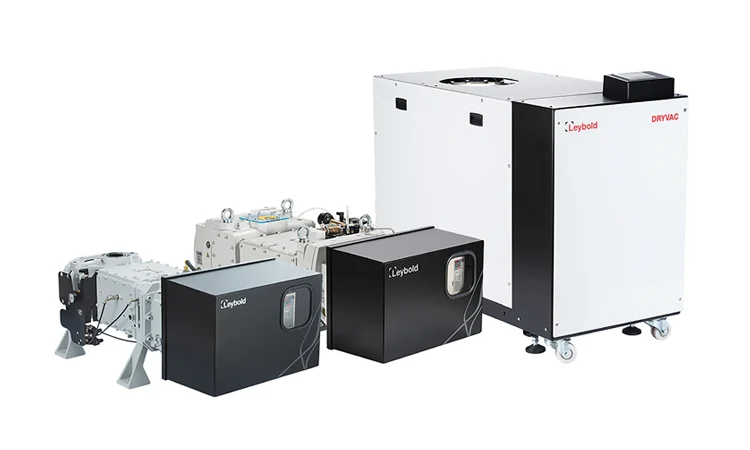
Vacuum pioneer Leybold mainly offers its dry-compressing screw pumps from the DRYVAC series for these applications. These are hermetically sealed and capable of pumping condensable vapors. The vacuum pumps also feature a robust shaft sealing system that uses barrier gas to prevent process gas from entering the bearing chambers.
SCREWLINE easy to clean
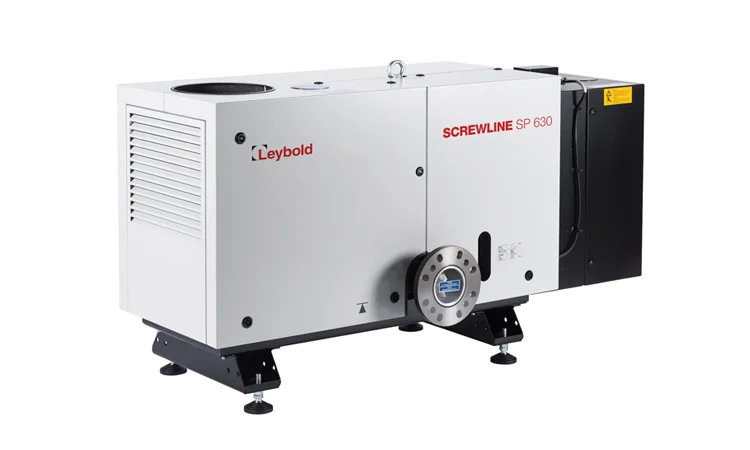
Prototype systems or plants with variable input materials can cause significant contamination of the vacuum system because, in addition to solvents, other components (such as low-molecular-weight plastic fractions) are also evaporated. Condensation in the vacuum system can cause deposits to form and clog the pumps. Leybold has SCREWLINE vacuum pumps in its portfolio for such difficult recycling applications. These vacuum pumps, which are also dry-compressing, have internally cooled rotors, which prevents any organic deposits from cracking. In addition, the floating bearings of the rotors allow the user to dismantle the pumping chamber themselves and clean the inside of the pump.
Energy-efficient RUVAC
Rotary piston or Roots blowers are ideal for maximizing suction capacity at low pressures, which are typically used for drying. The Leybold RUVAC WH series offers hermetically sealed and energy-efficient vacuum blowers. In addition to individual vacuum pumps, Leybold also offers complete vacuum systems for battery recycling. These include vacuum pumps and condensers to condense the solvents and feed them into a storage tank. The entire measurement and control technology can also be supplied, adds Sebastian Rosensträter.
Precise dimensioning is essential
The vacuum systems are tailored to the process conditions of the dryer in terms of the suction capacity of the vacuum pumps and the design of the condenser. The aim is to keep the pressure in the dryer below the saturated vapor pressure of the solvent mixture to be dried. The vacuum system must be optimized in terms of suction capacity to the operating point of the dryer. Leybold works closely with customers to develop customized solutions that ensure a robust drying process. More is not always better, emphasizes Rosensträter. He goes on to explain that oversizing the vacuum system does not yield any benefits. Although the pressure can be reduced further, this does not result in significantly faster drying because the evaporation of the electrolyte depends primarily on how much energy is supplied to the dryer.
Robust, energy-efficient, clean design
Ultimately, it all comes down to a precise and clean design. In addition, the vacuum system should require as little maintenance as possible. Because more maintenance means more downtime, and if the drying process stalls, the entire process chain comes to a halt, says Rosensträter. “As soon as the vacuum system fails, there is a problem. It must therefore be robust to enable high machine availability and, in the best case, be energy-efficient,” he adds.
Years of application experience
The advantage of Leybold pumps lies in the energy efficiency of the hermetically sealed pumps. In addition, the pumps of the DRYVAC and, above all, the SCREWLINE series operate at comparatively low temperatures. These prevent the cracking of organic components of the process gas and thus the build-up of hard layers on the rotors. We accompany our customers from the prototype to the series production process and work with them to develop the best vacuum system for the respective application, summarizes Sebastian Rosensträter. Leybold is very well positioned globally. In the field of battery recycling, dry Leybold vacuum pumps have been in industrial use for about five years.
Recycling replaces raw material extraction in mining
Based on these important factors and conditions, the processes are ultimately profitable. After all, battery recycling should above all be economically viable, because it is a business and there is competition for the rare raw materials lithium, nickel, and cobalt. Mining is an alternative method of raw material extraction. However, these are extremely complex and expensive extraction methods that also have an enormous ecological impact. So the bottom line is that the most efficient way to secure raw materials is through recycling, summarizes Sebastian Rosensträter.
Special challenges for vacuum pumps
The EU directive ATEX ATmosphères EXplosibles applies to devices used in potentially explosive environments. ATEX vacuum pumps are generally required where gases, vapors, and mists can form an explosive mixture with air. In battery recycling, potentially flammable gases such as solvent vapors are pumped; the material is already inerted by nitrogen during shredding, so that a correspondingly leak-tight design eliminates the need for complex, expensive ATEX equipment. Even if certain fluoride-containing conductive salts come into contact with water or moisture, there is a risk of toxic, corrosive hydrogen fluoride (HF) being produced, especially when heated. This could potentially cause significant problems throughout the entire plant. Leybold therefore ensures that its vacuum systems keep the process as dry as possible, as small amounts of HF and water are accompanied by low corrosion potential in gaseous form.
[Courtesy: Leybold]