

Accelerating Innovation, Manufacturing and Mobility
The Indian automotive industry is undergoing a remarkable transformation, emerging as one of the most vibrant and strategically important sectors of the country’s manufacturing economy. Driven by rising consumer aspirations, expanding infrastructure, technological advancements and growing global demand, the industry is witnessing significant growth across passenger vehicles, two-wheelers, three-wheelers, commercial vehicles and automotive components.
From conventional automobiles to electric and connected vehicles, the sector is evolving rapidly to address changing mobility requirements. India’s growing manufacturing capabilities, engineering expertise and expanding supplier ecosystem are positioning it as an increasingly important player in the global automotive landscape.
A Market Driven by Strong Fundamentals
India’s automotive growth story is supported by a combination of favourable economic and demographic factors. Rising disposable incomes, urbanisation, improved road connectivity, expanding logistics networks and increasing demand for personal mobility are driving vehicle sales. The growth of e-commerce, infrastructure projects, construction and industrial activity is also creating demand for commercial vehicles.
The two-wheeler and three-wheeler segments continue to play a vital role in India’s mobility ecosystem, particularly in rural and semi-urban markets. Passenger vehicles are witnessing increasing demand for SUVs, feature-rich models and safer, more comfortable automobiles. Meanwhile, commercial vehicle manufacturers are focusing on fuel efficiency, higher payload capacity, reliability and lower operating costs.
The automotive industry is also benefiting from the growing preference for technologically advanced vehicles equipped with intelligent safety systems, digital interfaces, connectivity and enhanced driving assistance features.
Electrification: Transforming the Future of Mobility
Perhaps the most significant development reshaping the automotive landscape is the transition towards electric mobility. Growing environmental concerns, emission regulations and the need to reduce dependence on fossil fuels are encouraging manufacturers to accelerate the development of electric vehicles (EVs).
Electric two-wheelers, three-wheelers, passenger cars and buses are gaining traction in the Indian market. This transition is opening up substantial opportunities in battery manufacturing, electric motors, power electronics, battery management systems, thermal management and charging infrastructure.
Advancements in battery chemistry, energy density, charging technology and battery recycling are expected to make electric vehicles increasingly competitive. At the same time, hybrid technologies, CNG, biofuels and hydrogen-powered mobility are emerging as complementary solutions. The future of automotive transportation is therefore likely to comprise a combination of technologies, each addressing specific mobility and operational requirements.
Government initiatives such as the PLI schemes for automobiles, advanced automotive technology and battery manufacturing are intended to strengthen domestic capabilities and encourage investments in next-generation mobility solutions.
Automotive Components: Strengthening the Manufacturing Ecosystem
The growth of the automobile industry is closely intertwined with the progress of its component manufacturing sector. India has developed a comprehensive supplier ecosystem encompassing engine components, transmissions, braking systems, bearings, steering assemblies, suspension systems, electrical and electronic components, precision-machined parts and specialised engineering products.
The Indian auto component industry recorded a turnover of approximately ₹7.60 lakh crore in FY 2025–26, registering 12.7% growth over the previous financial year. Exports also reached approximately US$24 billion, underlining the increasing global acceptance of Indian-manufactured components.
The emergence of electric and connected vehicles is further expanding the scope of this sector. Manufacturers are diversifying into electric powertrains, sensors, electronic control units, advanced battery systems and sophisticated software-integrated components.
For component manufacturers, the emphasis is increasingly on precision, reliability, lightweight construction, durability and cost competitiveness. Investments in research and development, advanced machinery, quality assurance and process innovation will be essential to meeting these expectations.
Smart Manufacturing: Driving Productivity and Precision
The automotive manufacturing landscape is being transformed by the adoption of Industry 4.0 technologies. Automation, robotics, artificial intelligence (AI), Industrial Internet of Things (IIoT), machine vision and digital twins are becoming integral to modern production facilities.
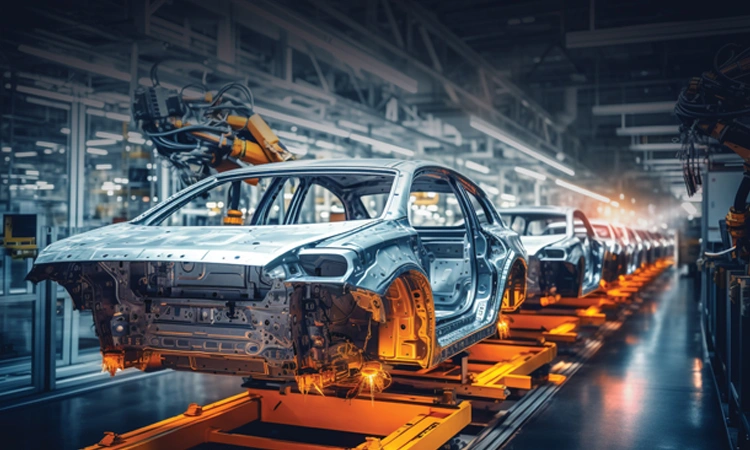
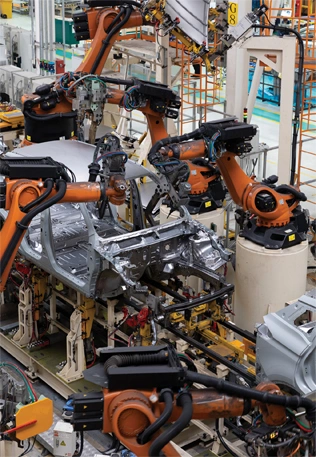
Robotic welding, automated assembly, CNC machining, intelligent material handling and automated inspection systems are enabling manufacturers to achieve higher productivity, consistency and precision. Predictive maintenance, supported by real-time equipment monitoring, helps minimise unplanned downtime and improve machine utilisation.
Digital technologies also facilitate better coordination between design, engineering, production and quality departments. Manufacturers can simulate production processes, identify inefficiencies and optimise workflows before implementing changes on the shop floor.
Another important trend is the increasing use of lightweight materials such as aluminium alloys, advanced high-strength steel and composites. These materials contribute to improved fuel efficiency, vehicle performance and safety, while helping extend the driving range of electric vehicles.
For machine-tool builders, tooling manufacturers, automation specialists and industrial technology providers, these developments present significant business opportunities.
Exports: India Strengthening Its Global Position
India’s emergence as a global automotive manufacturing destination is another important dimension of the industry’s growth. Competitive manufacturing costs, a skilled engineering workforce, a strong component supplier base and improving industrial infrastructure are attracting global attention.
In FY2025–26, India’s automobile industry recorded its highest-ever annual domestic sales across all four major vehicle categories. Passenger vehicle sales reached 46.43 lakh units, two-wheelers 2.17 crore units, commercial vehicles 10.80 lakh units and three-wheelers 8.36 lakh units. These figures reflect the breadth and strength of the domestic automotive market.
The export market is also gaining importance, with Indian manufacturers increasingly catering to customers in Asia, Africa, Latin America, Europe and other regions. Greater integration with global supply chains will depend on maintaining international quality standards, developing technologically advanced products and strengthening supply-chain reliability.
Sustainability: An Increasing Industry Priority
Sustainability is no longer merely a regulatory requirement; it is becoming a key business imperative. Automotive manufacturers are increasingly focusing on reducing the environmental footprint of their production operations through energy-efficient machinery, renewable energy, water conservation, waste minimisation and recycling.
The principles of circular manufacturing are gaining importance, particularly in the recovery and reuse of metals, plastics, batteries and other automotive materials. Green supply chains, responsible sourcing and energy-efficient production processes are also becoming important considerations for manufacturers and their suppliers.
The opportunities extend far beyond automobile manufacturers. Machine-tool builders, cutting-tool companies, bearing manufacturers, industrial automation providers, metrology specialists, material-handling solution providers and engineering technology companies will all have an important role in supporting the industry’s next phase of expansion.
Challenges and Opportunities
Despite its impressive growth trajectory, the automotive sector faces several challenges. Fluctuating raw material prices, geopolitical uncertainties, supply-chain disruptions, rising technology costs and stringent emission and safety regulations continue to influence business decisions. The transition towards electric mobility also demands substantial investments in infrastructure, technology development and workforce training.
Equally important is the need to develop skilled manpower capable of handling advanced manufacturing systems, electronics, software integration, robotics and data-driven production technologies.
The Road Ahead
The Indian automotive industry is poised for an exciting future. With strong domestic demand, increasing investments, expanding exports and a rapidly evolving technology landscape, the sector is well-positioned to sustain its growth momentum.
The opportunities extend far beyond automobile manufacturers. Machine-tool builders, cutting-tool companies, bearing manufacturers, industrial automation providers, metrology specialists, material-handling solution providers and engineering technology companies will all have an important role in supporting the industry’s next phase of expansion.
Ultimately, the future competitiveness of the automotive sector will depend on its ability to integrate innovation with manufacturing excellence, cost efficiency with quality, and economic growth with environmental responsibility.
India is not merely strengthening its position as a major automobile-consuming nation; it is steadily emerging as a global hub for automotive engineering, manufacturing and innovation. The road ahead promises to be an exciting journey, with technology, sustainability and industrial excellence driving the next chapter of automotive growth.
P.K. Balasubramanian
editor@divyamediaonline.com