

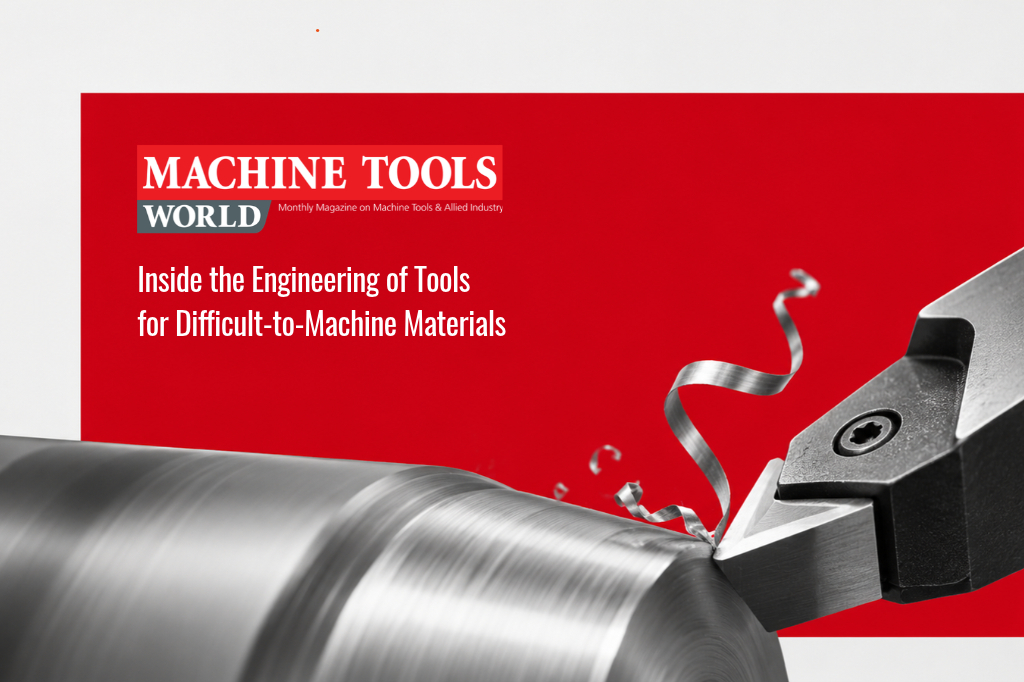
How thermal loading, work hardening, chip formation and tool wear determine the development of specialised cutting geometries and tool grades.
November 2026
A turbine blade used in an aircraft engine can require hours of machining before it is ready for assembly, with each operation placing high demands on the cutting tool. Nickel-based superalloys such as Inconel 718 are widely applied in these applications because they retain their mechanical properties under elevated temperatures and demanding conditions. However, the same characteristics that make these alloys suitable for turbine applications create significant difficulties during material removal. A published research study on nickel-based superalloy machining reports a case involving a turbine blade approximately one metre long, requiring over seven hours of rough and finish milling, with upwards of 40 cutting tools during the process. Such an example offers an indication of the tooling requirements associated with specialised aerospace components, where tool wear, machining time and surface quality have direct implications for production economics.