


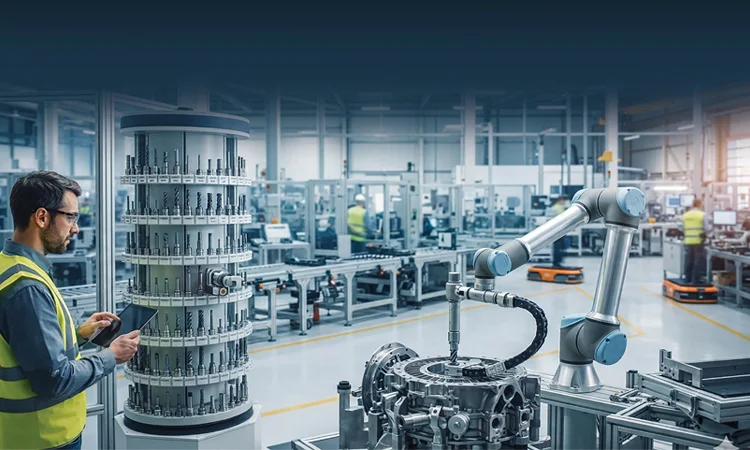
In modern manufacturing, productivity is increasingly determined not only by the capability of the machine tool, but also by the availability and condition of the cutting tools supporting it. A machine may be capable of operating at high speeds and feeds, yet a missing, worn, incorrectly preset or improperly selected tool can bring an entire production operation to a standstill. As manufacturers move towards lights-out production, high-mix manufacturing and increasingly automated machining, intelligent tool management has therefore emerged as a critical enabler of productivity. Smart Tool Management Systems (STMS) combine tool identification, inventory control, presetting, tool-life monitoring, data analytics and machine connectivity into an integrated digital ecosystem. Their objective is simple: ensure that the right tool, in the right condition, is available at the right machine and at the right time.
From Tool Cabinets to Digital Management
Traditionally, cutting-tool management was largely a manual activity. Operators and tool-room personnel maintained physical inventories, checked tool availability, recorded tool consumption and relied heavily on experience to determine when tools needed replacement.
Such systems worked reasonably well when production volumes were lower and machining processes were relatively straightforward. However, today’s factories may use hundreds or even thousands of tool assemblies, inserts, holders and accessories. Multiple machines may require identical or specialised tools, while production schedules can change rapidly.
Manual tracking can consequently result in overstocking, misplaced tools, emergency purchases, incorrect tool selection and unexpected machine stoppages.
Smart tool management replaces this fragmented approach with centralised, data-driven control.
Knowing Where Every Tool Is
One of the fundamental capabilities of a smart tool management system is tool identification and traceability. Barcodes, QR codes, RFID tags and other identification technologies can assign a unique digital identity to individual tools or tool assemblies.
The system can record critical information such as tool type, diameter, grade, geometry, manufacturer, location, number of uses, remaining tool life and associated machining parameters.
Instead of searching through tool cabinets or relying on handwritten records, an operator can immediately determine whether a required tool is available, where it is located and whether it is ready for use.
This seemingly simple capability can significantly reduce non-productive time.
Digital Tool Presetting
Tool presetting is another important element of intelligent tool management. Before a tool reaches the machine, its dimensions and geometry can be measured and entered into the digital system.
Modern tool presetters can measure parameters such as tool length, diameter, runout and cutting-edge condition with high precision. The resulting data can then be transferred electronically to the CNC control or manufacturing-management system.
This eliminates much of the manual data entry associated with traditional setups and reduces the possibility of incorrect tool offsets.
For high-volume production, the time saved during machine setup can translate directly into increased spindle utilisation.
Tool-Life Management
One of the most valuable functions of a smart tool management system is the ability to monitor tool life.
Traditionally, tools may have been replaced according to fixed schedules or operator judgement. However, actual tool life can vary depending on material, cutting parameters, machine condition, coolant performance and machining strategy.
A digital system can track the number of components machined, cutting time, spindle load or other relevant parameters. When a tool approaches its defined life limit, the system can alert the operator or automatically initiate a replacement strategy.
This reduces the risk of sudden tool failure while avoiding premature replacement of tools that still have useful life remaining.
Predictive Tool Management
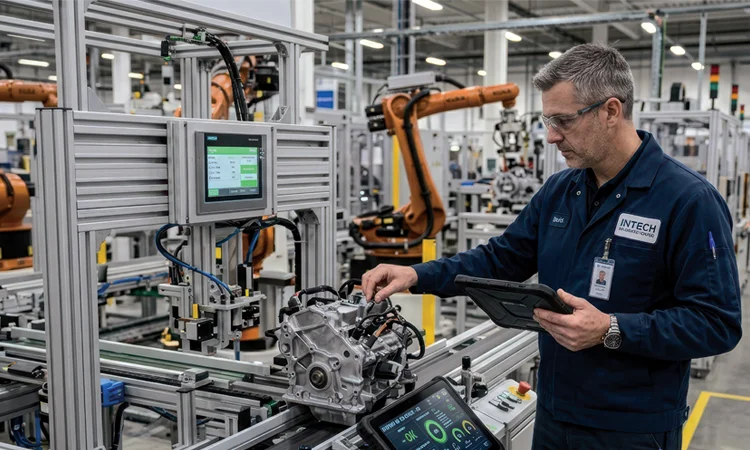
The next step is predictive tool management.
By collecting historical data from machining operations, manufacturers can identify patterns linking tool wear with cutting conditions, materials and machine behaviour. Advanced analytics and artificial intelligence can potentially predict when a tool is likely to reach a critical wear condition.
For example, changes in spindle power, vibration, acoustic emission or cutting forces can provide indications of tool degradation.
Instead of reacting to tool failure, manufacturers can move towards predictive intervention—replacing or reconditioning tools before they cause scrap, poor surface finish or unplanned downtime.
Integrating the Tool with the Machine
Smart tool management becomes considerably more powerful when it is connected directly to CNC machines and manufacturing software.
A connected system can communicate information about the tools required for a particular job, verify that the correct tool is loaded and provide the relevant tool data to the machine control.
If a required tool is unavailable or has insufficient remaining life, the system can flag the issue before production begins.
This is particularly important in unmanned or low-attendance machining environments, where a missing tool can otherwise stop production for hours.
Optimising Tool Inventory
Cutting tools represent a significant recurring cost in many machining operations. However, inventory is often difficult to optimise.
Excessive inventory locks up capital and increases the possibility of obsolete or unused tools. Insufficient inventory, on the other hand, can result in production delays.
Smart systems provide visibility into consumption patterns. By analysing historical usage, production schedules and tool-life data, manufacturers can establish appropriate minimum and maximum stock levels.
Automated alerts can indicate when inserts, drills, end mills, holders or other consumables need to be reordered. Integration with enterprise resource planning and procurement systems can further streamline replenishment.
The result is a shift from reactive purchasing to demand-based inventory management.
Tool Standardisation
Another advantage of digital tool management is the ability to identify opportunities for standardisation.
Manufacturing organisations often discover that different departments or machines use multiple variants of tools performing essentially the same function. A centralised database can reveal such duplication.
Standardising tools and holders wherever technically feasible can simplify inventory, reduce purchasing complexity and improve interchangeability between machines.
It can also make operator training easier and improve consistency across production lines.
Supporting Lights-Out Manufacturing
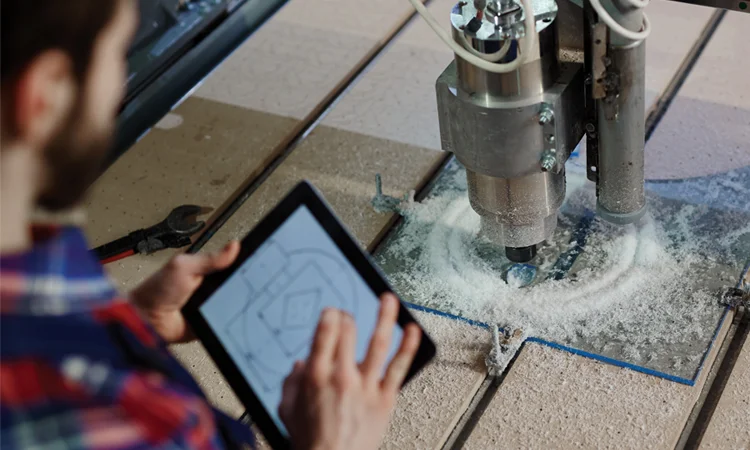
The importance of smart tool management becomes even greater as manufacturers move towards lights-out and autonomous production.
An automated machining cell cannot afford to stop because a tool was not available, its life was incorrectly recorded or the wrong offset was entered.
Smart systems can support automated tool loading, tool-life tracking, inventory verification and replenishment. Combined with tool presetting, robots, automated material handling and connected CNC machines, they form an important foundation for autonomous machining.
The goal is not simply to eliminate the operator, but to ensure that the production system can make informed decisions and maintain continuity with minimal intervention.
Sustainability Through Better Tool Utilisation
Smart tool management can also contribute to sustainability.
Extending tool life reduces the consumption of carbide, high-speed steel and other tool materials. Better inventory control reduces obsolete stock and unnecessary transportation. Accurate tool-life monitoring reduces scrap caused by worn or incorrectly selected tools.
In addition, data-driven optimisation of cutting parameters can help reduce energy consumption and machining time.
Thus, digital tool management can contribute simultaneously to productivity, cost reduction and resource efficiency.
The Road Ahead
The future of smart tool management will increasingly involve cloud connectivity, artificial intelligence, digital twins and machine-learning algorithms. Tool databases are likely to become more closely integrated with CAD/CAM, MES, ERP and CNC platforms.
A production system may eventually be able to analyse an upcoming job, determine the optimum tooling strategy, check tool availability and condition, schedule tool presetting, order missing tools and prepare the machine—all before the first component enters production.
Zero downtime may remain an ambitious objective, but smart tool management can bring manufacturers significantly closer to it.
The cutting tool is no longer merely a consumable at the end of a machine spindle. In the connected factory, it becomes a digitally identifiable and data-generating asset. By knowing what tools are available, where they are, how they are performing and when they will need replacement, manufacturers can transform tool management from a routine support function into a strategic productivity advantage.
Smart tool management is ultimately about one thing: ensuring that the machine never has to wait for its tools.