

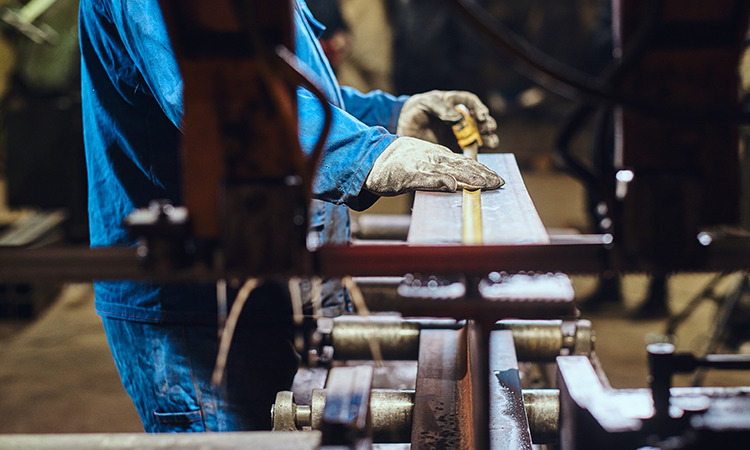
Metal forming technologies, such as forging, stamping, extrusion, drawing, fine blanking, and roll forming, continue to form the backbone of industrial manufacturing, enabling high-volume, cost-effective production of mechanically robust components across automotive, aerospace, electrical, electronics, consumer goods, and infrastructure sectors.
Even as emerging manufacturing approaches such as additive manufacturing (3D printing) gain relevance for prototyping and niche applications, metal forming remains indispensable due to its advantages in material integrity, surface quality, structural reliability, and production scalability. As industries move toward lightweighting, advanced high-strength materials, electrification, and sustainability-driven manufacturing, metal forming processes are being pushed to operate at higher speeds, greater contact pressures, tighter tolerances, and reduced lubrication regimes.
In this evolving environment, tool performance and lifecycle cost have become decisive competitive factors. This is where surface engineering, and particularly Physical Vapour Deposition (PVD) coatings, plays a critical enabling role. PVD coatings enhance wear resistance, reduce friction, mitigate galling, and support dry or near-dry forming, while preserving dimensional accuracy and core mechanical properties.
However, PVD coatings cannot be viewed as standalone solutions. Their success in metal forming applications depends fundamentally on substrate metallurgy, heat treatment, near-surface engineering, and surface condition. This article reviews the PVD coating process in the context of metal forming, highlighting its merits and limitations while emphasising the importance of an integrated surface engineering approach.
Overview of the PVD Coating Process
Physical Vapour Deposition (PVD) is a vacuum-based, plasma-assisted thin film deposition process in which coating material is converted into vapour and, depending on the deposition technology, partially or highly ionised before being deposited onto the substrate surface. The degree of ionisation and ion energy directly influences coating density, adhesion, and load-bearing capability, key requirements in metal forming applications.
In electron beam evaporation and conventional magnetron sputtering, the target material is primarily vapourised, with a fraction of the vapour species becoming ionised through interaction with the plasma environment. In cathodic arc (Arc-PVD) processes, a highly ionised metal plasma is generated directly at the cathode spot, typically exceeding 80–90% ionisation, resulting in energetic ion-assisted deposition and excellent adhesion. Recent advancements such as High-Power Impulse Magnetron Sputtering (HiPIMS) significantly increase ionisation levels in sputtering-based PVD, approaching arc-like ionisation while maintaining smoother coating morphology.
Across all PVD variants, reactive gases such as nitrogen or carbon-containing species are introduced to form hard compound coatings. Deposition typically occurs at relatively high temperatures (approximately 350–500°C), preserving the bulk microstructure and dimensional stability of hardened tool steels. Typical coating thickness ranges from 1 to 5 microns, making PVD ideally suited for precision metal forming tools.
Key Process Steps
• Surface preparation and activation through cleaning and in-situ plasma etching
• Vacuum generation and plasma establishment
• Vaporization, ionisation, and reactive deposition
• Ion-assisted coating growth under substrate bias
• Controlled cooling to retain tool properties
Metallurgy: The Foundation of Coating Performance
The performance of a PVD-coated forming tool begins with correct tool steel selection and metallurgical quality. Cold work, hot work, and powder metallurgy steels must offer high compressive strength, adequate toughness, uniform microstructure, and resistance to fatigue and chipping. A coating cannot compensate for deficiencies in base material quality. Poor carbide distribution, excessive retained austenite, or metallurgical segregation can lead to premature coating cracking or delamination under forming loads.
Heat Treatment and Near-Surface Engineering
Proper heat treatment is essential to achieve target hardness, microstructural stability, and controlled residual stresses. Inconsistent heat treatment can result in substrate deformation or stress accumulation beneath the coating during service. Because PVD coatings are thin and ceramic in nature, they require a mechanically supportive near-surface zone. Thermochemical treatments such as plasma nitriding, nitrocarburising, or duplex treatments (nitriding followed by PVD) enhance surface hardness, load-bearing capacity, and fatigue resistance. A well-designed duplex system significantly extends coating life by preventing substrate deformation beneath the coating.
Surface Preparation and Surface Texturing
PVD coatings replicate the underlying surface topography. Any grinding marks, scratches, or surface defects present prior to coating are transferred to the coating and may act as stress raisers. Optimised surface finishing improves adhesion, reduces friction, and enhances tribological performance. Increasingly, engineered surface texturing is being employed prior to coating. Controlled micro-textures act as lubricant reservoirs, reduce real contact area, and improve galling resistance. When combined with PVD coatings, surface texturing transforms the coating into a functional tribological system.
Merits of PVD Coatings in Metal Forming
When supported by correct metallurgy and surface engineering, PVD coatings offer:
• Significant improvement in tool life
• Reduced friction and forming forces
• Enhanced resistance to adhesive and abrasive wear
• Improved surface finish of formed components
• Reduced dependence on lubricants
These benefits translate directly into higher productivity, reduced downtime, and lower cost per component.
Limitations and Demerits
• Despite their advantages, PVD coatings have certain limitations:
• Line-of-sight deposition restricts coating of deep cavities
• High sensitivity to substrate condition and preparation
• Requirement for precise coating selection and process control
• Higher initial investment compared to conventional treatments
Importantly, many coating failures attributed to PVD originate from inadequate metallurgy, heat treatment, or surface preparation, rather than the coating itself.
Emerging Applications and Challenges
The forming of advanced high-strength steels, aluminium alloys, and copper-based materials is driving demand for coatings with higher thermal stability, improved galling resistance, and enhanced oxidation behaviour. Additionally, the trend toward miniaturisation is increasing the importance of ultra-thin, dense PVD coatings for micro-forming and precision tooling applications. Future challenges include coating complex geometries more uniformly, improving performance under extreme forming loads, and reducing cost per component. Advances such as HiPIMS, tailored nano-layer coatings, and data-driven process control are expected to address these challenges.
Conclusion
PVD coatings are not standalone solutions but an integral part of a holistic surface engineering strategy. In metal forming applications, their success depends on the combined optimisation of metallurgy, heat treatment, near-surface engineering, surface finishing, and coating technology. As metal forming continues to evolve under increasing performance and sustainability demands, metallurgy-driven PVD coating solutions will play a decisive role in ensuring tool reliability, process efficiency, and long-term industrial competitiveness.