

Delivering Precision, Productivity and Repeatability in Modern Manufacturing
In the vast world of metal cutting technologies, broaching occupies a unique and highly specialized position. While machining processes such as turning, milling, drilling, and grinding are more widely recognized, broaching remains one of the most productive and accurate methods for producing complex profiles, internal forms, splines, keyways, and precision surfaces in a single operation.As a subtractive manufacturing process, broaching removes material from a workpiece through a series of progressively larger cutting teeth arranged on a specially designed tool called a broach. The process is renowned for its ability to achieve high dimensional accuracy, excellent surface finish, and exceptional production rates.
Despite the growing prominence of advanced machining technologies, broaching continues to play a critical role in automotive, aerospace, defense, energy, agricultural equipment, and general engineering industries, proving that sometimes the most efficient solution is also one of the most enduring.
Understanding the Broaching Process
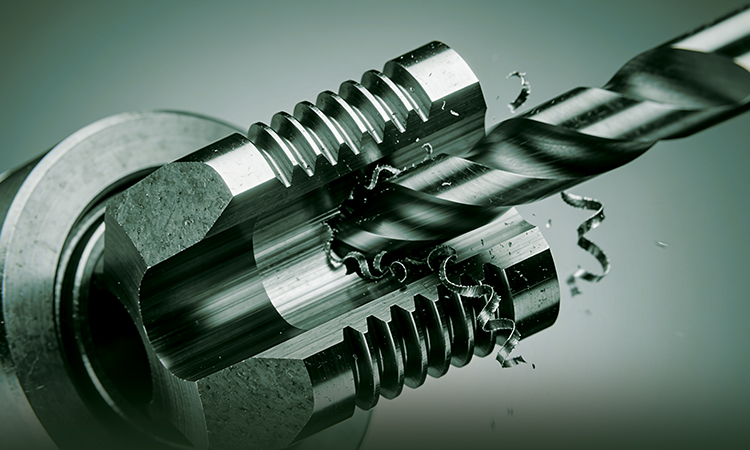
Broaching is a machining operation in which a multi-toothed cutting tool passes over or through a workpiece to remove material progressively. Unlike milling or turning operations that often require multiple passes, broaching typically completes the machining process in a single stroke. Each tooth on the broach removes a small amount of material, with successive teeth increasing in size until the desired profile is achieved.
The process may involve either pulling or pushing the broach through the workpiece, depending on the application and machine configuration. Since all cutting teeth are integrated into a single tool, broaching offers exceptional consistency and repeatability. This ability to combine roughing, semi-finishing, and finishing operations into one cycle makes broaching one of the most productive subtractive manufacturing methods available.
Types of Broaching Operations
Broaching operations are generally classified into internal and external broaching. Internal broaching is used to machine features inside a component, such as keyways, splines, hexagonal holes, square holes, and various internal profiles. It is extensively used in automotive transmission components, gears, couplings, and hydraulic systems.
External broaching, on the other hand, produces profiles on the external surfaces of components. It is commonly employed for machining flat surfaces, slots, contours, turbine blade roots, and specialized geometric forms. Surface broaching, rotary broaching, continuous broaching, and pot broaching represent additional variations that expand the process’s versatility across different manufacturing applications.
Why Broaching Excels in High-Volume Production
One of broaching’s greatest advantages is its remarkable productivity. Because the entire profile is generated in a single stroke, cycle times are significantly shorter compared to conventional machining methods. In mass production environments, this capability translates directly into higher throughput and lower manufacturing costs.
The process also minimizes operator intervention and reduces the need for multiple machine setups. Components emerge from the broaching operation nearly finished, often eliminating the need for secondary machining processes. For industries producing thousands or millions of identical parts annually, the productivity benefits of broaching are particularly compelling.
Precision and Surface Quality
Modern manufacturing demands high levels of dimensional accuracy and surface integrity, and broaching consistently delivers on both fronts. Since the broach tool incorporates finishing teeth at the final stages of the cutting sequence, excellent surface finishes can be achieved directly from the machining operation. Tight tolerances and superior profile accuracy are routinely maintained, even in high-volume production environments.
The controlled nature of the cutting process also contributes to repeatability, ensuring that every component meets the required specifications. This combination of accuracy, consistency, and productivity explains why broaching remains indispensable in industries where quality requirements are stringent.
Tool Design: The Key to Success
The effectiveness of the broaching process depends heavily on the design and manufacture of the broach itself. A broach is a sophisticated cutting tool containing multiple teeth arranged in a carefully engineered sequence. The tooth geometry, pitch, rake angles, clearance angles, and rise per tooth are precisely calculated to optimize cutting performance.
Broaches are typically manufactured from high-speed steel, powder metallurgy materials, or carbide-tipped constructions to withstand demanding machining conditions. Because broaches are custom designed for specific applications, they represent a significant investment. However, their ability to produce large volumes of identical components with exceptional consistency often justifies the cost. Proper tool design remains one of the most critical factors influencing broaching productivity and performance.
Applications Across Industries
Broaching is widely used in industries where precision and productivity are paramount. The automotive sector relies heavily on broaching for producing transmission gears, steering components, clutch hubs, differential parts, and spline profiles. The process supports the high-volume production requirements characteristic of automotive manufacturing.
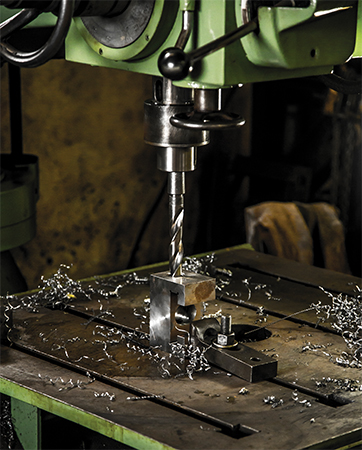
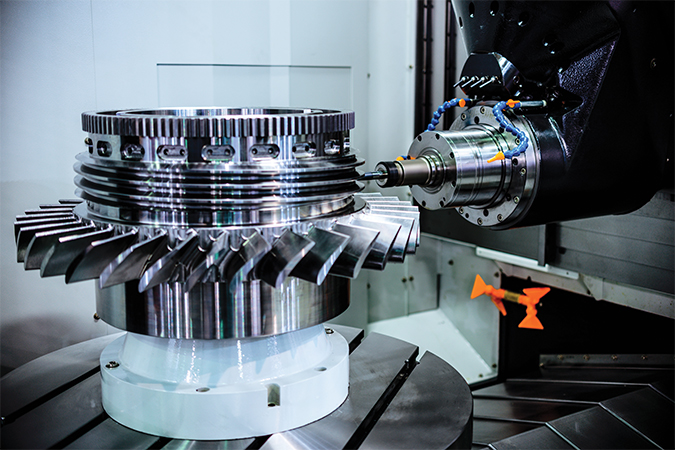
Aerospace manufacturers employ broaching for turbine engine components, blade root profiles, structural fittings, and precision aerospace assemblies. Defense applications include weapon systems, transmission components, and specialized mechanical assemblies. Agricultural machinery, construction equipment, pumps, valves, and industrial gearboxes also benefit from broaching technology. Its ability to machine complex forms rapidly and accurately makes broaching a valuable process across numerous sectors.
Advances in Broaching Technology
Like many manufacturing technologies, broaching has evolved significantly in recent years. Modern broaching machines incorporate CNC controls, automated loading systems, advanced hydraulic drives, and real-time process monitoring capabilities. These enhancements improve productivity, reliability, and process control.
Tool materials have also advanced considerably. Improved high-speed steels, carbide technologies, and wear-resistant coatings have extended tool life while enabling higher cutting speeds. Simulation software is increasingly used to optimize broach design and predict cutting performance before production begins. These digital tools help reduce development time and improve process efficiency. Automation and robotics are further enhancing broaching operations, particularly in high-volume manufacturing environments where consistent productivity is essential.
Challenges and Limitations
Despite its many advantages, broaching is not without challenges. The primary limitation lies in the high initial cost of broach tooling. Since broaches are generally custom-designed for specific applications, their economic viability is greatest in medium- to high-volume production scenarios.
Design modifications can necessitate new tooling, increasing costs and lead times. Additionally, broaching machines require substantial rigidity and power to accommodate the significant cutting forces generated during operation. The process may also be less suitable for low-volume production runs where more flexible machining methods offer greater economic advantages.
Nevertheless, where production volumes justify the investment, broaching often remains the most efficient manufacturing solution available. Broaching continues to be one of the most efficient and productive subtractive metal-cutting processes available to manufacturers. Its ability to generate complex profiles, maintain tight tolerances, achieve superior surface finishes, and deliver high production rates makes it an invaluable technology across a wide range
of industries.
Broaching in the Era of Smart Manufacturing
The rise of Industry 4.0 is creating new opportunities for broaching technology. Sensors integrated into broaching machines can monitor cutting forces, vibration, temperature, and tool wear in real time. Data analytics enable predictive maintenance strategies that reduce downtime and improve operational efficiency.
Automated tool management systems help optimize broach utilization and maintenance schedules. Digital twins and process simulation technologies are also being adopted to enhance process planning and performance optimization. As manufacturing facilities become increasingly connected and data-driven, broaching is evolving alongside other machining technologies to remain relevant in modern production environments.
Conclusion
Broaching continues to be one of the most efficient and productive subtractive metal-cutting processes available to manufacturers. Its ability to generate complex profiles, maintain tight tolerances, achieve superior surface finishes, and deliver high production rates makes it an invaluable technology across a wide range of industries.
While the process requires specialized tooling and significant upfront investment, its advantages in high-volume manufacturing often outweigh these considerations. Advances in machine technology, tooling materials, automation, and digital integration are further strengthening the position of broaching in contemporary manufacturing.
In an era where productivity, precision, and cost efficiency are critical competitive factors, broaching remains a powerful reminder that well-established technologies can continue to evolve and deliver exceptional value. Far from being overshadowed by newer machining methods, broaching stands as a proven and indispensable contributor to modern metal-cutting excellence.