


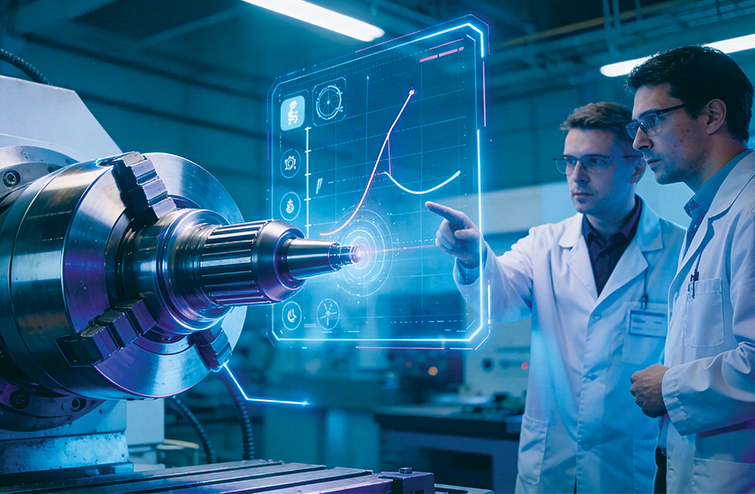
In the world of machining, where precision, speed, and reliability define success, the spindle stands as the most critical component of a machine tool. Often referred to as the “heart” of the machine,
the spindle is responsible for holding and rotating the cutting tool or workpiece at the required speed and torque. Its performance directly influences machining accuracy, surface finish, productivity, and tool life. As manufacturing continues to evolve toward higher precision and efficiency, spindle technology has undergone significant advancements, setting new benchmarks in performance and reliability.
Understanding the Role of the Spindle at its core, a spindle is a rotating axis that transmits motion and power from the machine to the cutting tool. In milling machines, the spindle rotates the cutting tool, while in lathes, it rotates the workpiece. Regardless of the configuration, the spindle must maintain exceptional accuracy and stability under varying loads and speeds. The performance of a spindle is defined by several key parameters, including rotational speed, torque, power, stiffness, and thermal stability. Achieving the right balance among these parameters is essential for meeting the diverse requirements of modern machining applications-from heavy-duty roughing to ultra-precision finishing.
Types of Spindles in Modern Machining
Spindles are available in various configurations, each designed to meet specific machining needs. Belt-driven spindles are among the most traditional types, where power is transmitted from the motor via belts and pulleys. These spindles are known for their simplicity, cost-effectiveness, and ability to deliver high torque at lower speeds. Direct-drive spindles, on the other hand, connect the motor directly to the spindle shaft, eliminating the need for belts. This design reduces vibration and improves efficiency, making it suitable for high-speed applications. Motorized spindles, also known as built-in spindles, integrate the motor within the spindle housing. This compact design offers high rotational speeds, reduced transmission losses, and excellent dynamic performance. These spindles are widely used in high-speed machining and precision applications. Each type has its advantages and limitations, and the choice depends on factors such as material, machining process, and required precision
Speed, Torque, and Power: The Performance Triangle
The performance of a spindle is often described in terms of speed, torque, and power. These parameters are interdependent and must be carefully optimized. High-speed spindles are essential for machining lightweight materials such as aluminum and composites, where faster cutting speeds improve productivity and surface finish. However, high speed often comes at the expense of torque. Conversely, heavy-duty machining of hard materials such as steel and titanium requires high torque at lower speeds. This is critical for maintaining cutting forces and preventing tool wear. Modern spindles are designed to offer a wide operating range, enabling them to handle both high-speed finishing and heavy-duty roughing. Advanced control systems allow for dynamic adjustment of speed and torque based on the machining conditions.
Bearing Systems: The Backbone of Precision
The accuracy and reliability of a spindle largely depend on its bearing system. Bearings support the spindle shaft and ensure smooth, precise rotation. Angular contact ball bearings are commonly used in high-speed spindles due to their ability to handle both radial and axial loads. For ultra-high-speed applications, ceramic bearings are preferred because of their lower weight and reduced heat generation. Hydrostatic and air bearings represent the pinnacle of precision. These systems use a thin film of fluid or air to support the spindle, eliminating direct contact and reducing friction to near zero. While they offer exceptional accuracy and surface finish, they are typically used in specialized applications due to their complexity and cost. Proper lubrication and maintenance of bearings are crucial for ensuring long spindle life and consistent performance.
Thermal Stability and Its Impact
Thermal effects are one of the most significant challenges in spindle design. As the spindle operates, heat is generated due to friction and motor losses. This can lead to thermal expansion, which affects dimensional accuracy. To address this, modern spindles incorporate advanced cooling systems, such as liquid cooling and air circulation. Temperature sensors and compensation algorithms are also used to monitor and adjust for thermal variations in real time. Thermal stability is particularly important in high-precision applications, where even minor deviations can result in unacceptable errors.
Tool Holding and Interface Systems
The interface between the spindle and the cutting tool is another critical aspect of spindle performance. Tool holders must provide secure clamping, precise alignment, and minimal runout. Common tool holding systems include CAT, BT, HSK, and Capto interfaces. Among these, HSK (Hollow Shank Taper) is widely used in high-speed machining due to its dual-contact design, which ensures better rigidity and accuracy. Automatic tool changers (ATCs) further enhance productivity by enabling quick and reliable tool changes. The integration of advanced tool holding systems with spindle design ensures consistent performance and reduced downtime.
Spindle Dynamics and Vibration Control
Vibration is a major factor affecting machining quality. Excessive vibration can lead to poor surface finish, reduced tool life, and even damage to the machine. Spindle dynamics play a crucial role in minimizing vibration. Factors such as mass distribution, stiffness, and damping characteristics must be carefully optimized during design. Advanced simulation tools are used to analyze spindle behavior under different operating conditions. Additionally, active vibration control systems and damping technologies are being developed to further enhance stability.
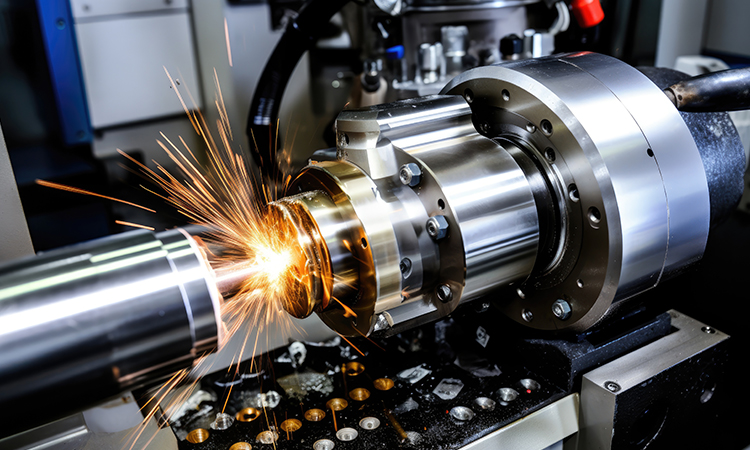
Maintenance and Condition Monitoring
Given the critical role of spindles, their maintenance is of utmost importance. Unexpected spindle failures can lead to costly downtime and production losses. Condition monitoring systems are increasingly being used to track spindle health. Sensors measure parameters such as vibration, temperature, and noise, providing early warning signs of potential issues. Predictive maintenance, enabled by data analytics and machine learning, allows manufacturers to schedule maintenance activities proactively, reducing the risk of unplanned failures. Regular inspection, proper lubrication, and adherence to operating guidelines are essential for maximizing spindle life and performance.
Emerging Trends in Spindle Technology
Spindle technology is continuously evolving to meet the demands of modern manufacturing. One of the key trends is the integration of smart features, such as embedded sensors and connectivity, enabling real-time monitoring and control. High-speed spindles capable of exceeding 100,000 RPM are being developed for specialized applications such as micro-machining and electronics manufacturing. At the same time, advancements in materials and design are enabling higher torque capabilities for heavy-duty applications. Hybrid spindles, capable of performing multiple processes such as milling and grinding, are also gaining traction. These spindles enhance machine versatility and reduce the need for multiple setups. Sustainability is another important focus area. Energy-efficient spindle designs and advanced cooling systems are helping reduce the environmental impact of machining operations.
The Road Ahead
As industries push for greater precision, productivity, and flexibility, the role of the spindle will become even more critical. Future developments are likely to focus on enhancing performance, reliability, and intelligence. The integration of artificial intelligence and digital twins will enable more accurate prediction of spindle behavior and optimization of machining processes. This will not only improve precision but also extend spindle life and reduce costs. In the context of Industry 4.0, spindles will become an integral part of connected manufacturing systems, contributing to smarter and more efficient operations.
Conclusion
Spindles are much more than just rotating components; they are the driving force behind modern machining. Their performance directly impacts every aspect of the machining process, from accuracy and surface finish to productivity and cost. With continuous advancements in design, materials, and technology, spindles are setting new standards in machining performance. Understanding their intricacies and capabilities is essential for manufacturers seeking to stay competitive in an increasingly demanding landscape. In the quest for excellence in machining, the spindle remains at the center-powering innovation, enabling precision, and shaping the future of manufacturing.