


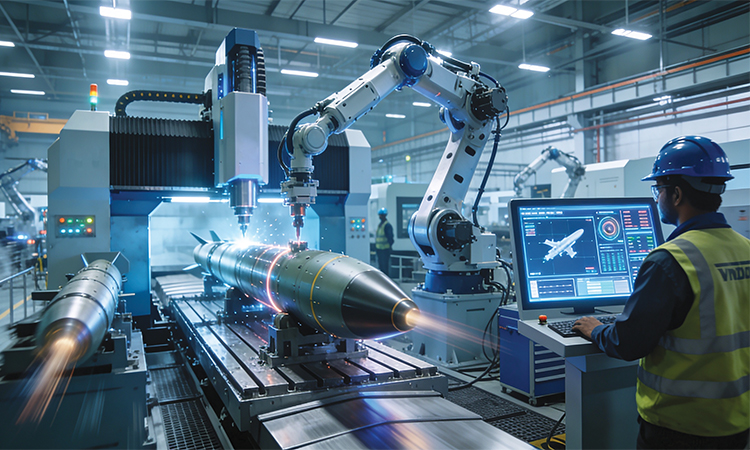
The strength of a nation’s defence capability rests not only on its armed forces but also on the robustness of its manufacturing backbone. At the heart of this backbone lies the machine tool industry-often referred to as the “mother industry”-which enables the production of precision components essential for defence equipment. From fighter aircraft and naval vessels to missiles, armored vehicles, and advanced electronics, machine tools play a pivotal role in shaping, finishing, and assembling mission-critical parts with uncompromising accuracy.
In a country like India, where defence indigenization has gained momentum under initiatives such as Atmanirbhar Bharat, the importance of advanced machine tools has never been more pronounced. Institutions such as Defence Research and Development Organisation (DRDO), Hindustan Aeronautics Limited (HAL), and Bharat Heavy Electricals Limited (BHEL) are increasingly relying on indigenous machine tool capabilities to reduce dependency on imports and enhance strategic autonomy.
The Strategic Role of Machine Tools in Defence
Defence manufacturing demands an exceptional level of precision, repeatability, and reliability. Components such as turbine blades, missile casings, gun barrels, and guidance systems must adhere to stringent tolerances, often in the micron range. Machine tools-particularly CNC (Computer Numerical Control) systems-enable this level of precision by combining advanced mechanics with sophisticated software control. Unlike general industrial applications, defence production often involves low-volume, high-complexity components made from exotic materials such as titanium alloys, Inconel, composites, and hardened steels.
These materials are chosen for their strength, heat resistance, and durability but pose significant machining challenges. Advanced machine tools equipped with high-speed spindles, multi-axis capabilities, and adaptive control systems are essential to process such materials efficiently.
Types of Machine Tools Used in Defence Manufacturing
1. CNC Machining Centers
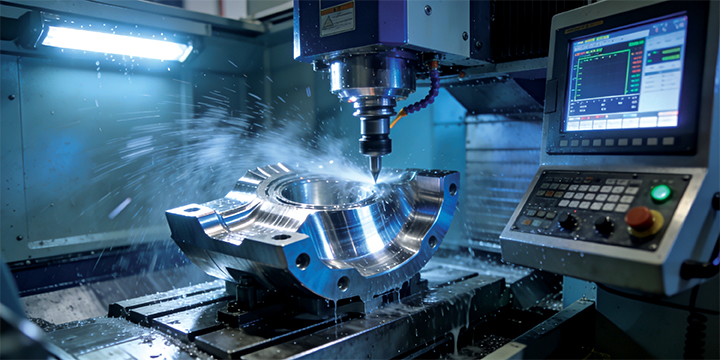
CNC machining centers form the backbone of modern defence manufacturing. Multi-axis machining centers-particularly 5-axis and beyond-are widely used for producing complex geometries in a single setup. This reduces errors, improves accuracy, and enhances productivity.
Applications include:
• Aerospace structural components
• Missile housings
Radar and communication system parts
2. Turning Centers and Mill-Turn Machines
High-precision turning centers and mill-turn machines are used for rotational components such as shafts, barrels, and cylindrical housings. Mill-turn machines combine turning and milling operations, reducing the need for multiple setups.
3. Grinding Machines
Grinding is critical for achieving ultra-fine surface finishes and tight tolerances. Internal, external, and surface grinding machines are used extensively in defence applications such as bearings, gears, and precision shafts.
4. Electrical Discharge Machines (EDM)
EDM is indispensable for machining hard materials and intricate shapes that are difficult to achieve with conventional methods. Wire EDM and sinker EDM are widely used in tooling, dies, and aerospace components.
5. Additive Manufacturing Systems
Although not traditional machine tools, additive manufacturing (AM) systems are increasingly integrated into defence production. They enable the creation of lightweight, complex components with reduced material waste.
6. Gear Cutting and Finishing Machines
Gear systems are critical in defence equipment such as tanks, helicopters, and naval propulsion systems. High-precision gear hobbing, shaping, and grinding machines ensure optimal performance and longevity.
Advanced Technologies Driving Defence Machining
Multi-Axis Machining
Multi-axis machining allows simultaneous movement along multiple axes, enabling the production of complex geometries with fewer setups. This is particularly important for aerospace and missile components.
High-Speed Machining (HSM)
HSM enhances productivity and surface finish while reducing machining time. It is especially useful for lightweight materials such as aluminum alloys used in aircraft structures.
Digital Twins and Simulation
Digital twin technology enables virtual simulation of machining processes, allowing manufacturers to optimize tool paths, reduce errors, and improve efficiency before actual production.
Industry 4.0 Integration
Smart machine tools equipped with sensors, IoT connectivity, and data analytics enable real-time monitoring, predictive maintenance, and improved decision-making. This aligns with the broader adoption of Industry 4.0 in defence manufacturing.
Challenges in Machine Tools for Defence Production
Despite significant advancements, several challenges persist:
High Capital Investment
Advanced machine tools, especially multi-axis CNC systems and hybrid machines, require substantial investment. This can be a barrier for small and medium enterprises (SMEs) entering the defence sector.
Skill Gap
Operating and maintaining sophisticated machine tools requires highly skilled personnel. Bridging the skill gap through training and education is crucial.
Material Machinability
Exotic materials used in defence applications are difficult to machine, leading to tool wear, heat generation, and longer cycle times.
Quality Assurance
Defence components must meet rigorous quality standards. This necessitates the integration of advanced inspection systems such as coordinate measuring machines (CMMs) and laser trackers.
Supply Chain Constraints
Dependence on imported components such as high-end CNC controllers and precision spindles can hinder domestic manufacturing capabilities.
India’s Push Towards Indigenous Machine Tool Capability
India has made significant strides in developing its domestic machine tool industry. Organizations like Bharat Electronics Limited (BEL) and Ordnance Factory Board (OFB) have increasingly adopted indigenous solutions.
Government initiatives such as:
• Make in India
• Atmanirbhar Bharat
• Defence Production and Export Promotion Policy (DPEPP)
have encouraged domestic manufacturing and reduced reliance on imports. The establishment of defence corridors in Tamil Nadu and Uttar Pradesh further strengthens the ecosystem by fostering collaboration between OEMs, MSMEs, and research institutions.
Role of Private Sector and MSMEs
The private sector and MSMEs are playing an increasingly important role in defence manufacturing. With access to advanced machine tools and government support, these entities are contributing to the production of critical components. Collaborations between private companies and organizations like DRDO are enabling technology transfer and innovation. This synergy is essential for building a self-reliant defence manufacturing ecosystem.
Quality, Certification, and Compliance
Defence manufacturing is governed by stringent standards and certifications. Machine tools used in this sector must ensure:
• High repeatability and accuracy
• Robustness and reliability
• Compliance with international standards such as ISO and AS9100
Advanced metrology and inspection systems are integrated with machine tools to ensure adherence to these standards.
Future Trends in Defence Machine Tools
a. Hybrid Machines
Combining additive and subtractive manufacturing capabilities, hybrid machines offer greater flexibility and efficiency.
b. AI-Driven Machining
Artificial intelligence is being used to optimize machining parameters, predict tool wear, and enhance productivity.
c. Automation and Robotics
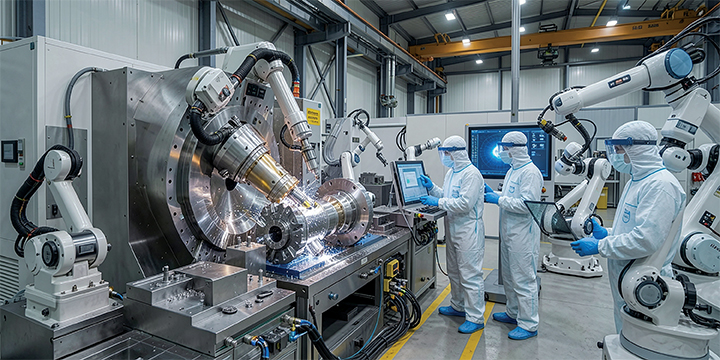
Automated material handling systems and robotic integration are improving efficiency and reducing human intervention.
d. Sustainable Manufacturing
Energy-efficient machine tools and eco-friendly machining processes are gaining importance in line with global sustainability goals.
The Road Ahead
The future of machine tools in defence production is closely tied to technological innovation and strategic policy support. As geopolitical dynamics evolve, the need for self-reliance in defence manufacturing becomes increasingly critical. India’s focus on indigenous development, coupled with advancements in machine tool technology, positions it well to become a global hub for defence manufacturing. However, achieving this vision requires continued investment in R&D, skill development, and infrastructure.
Conclusion
Machine tools are the silent enablers of defence production, shaping the components that safeguard a nation’s security. Their role extends beyond manufacturing-they are integral to innovation, precision, and technological advancement. As India continues its journey towards self-reliance in defence, the machine tool industry will play a central role in driving this transformation. By embracing advanced technologies, fostering collaboration, and addressing existing challenges, the industry can set new benchmarks in precision engineering and contribute significantly to national security. In essence, the evolution of machine tools is not just a story of industrial progress-it is a narrative of strategic empowerment, where precision engineering meets national defence.