

Multi-Axis Machining: A New Era of Productivity
Manufacturing technology has evolved dramatically over the past few decades, driven by the relentless demand for higher precision, faster production cycles, and greater flexibility. Among the many technological advances that have reshaped modern manufacturing, the advent of multi-axis machines stands out as one of the most transformative. These sophisticated machines have revolutionized the way complex components are manufactured, enabling industries to achieve unprecedented levels of productivity, accuracy, and efficiency.
In an era where global competition is intense and product designs are becoming increasingly intricate, manufacturers must adopt advanced machining solutions to remain competitive. Multi-axis machining centers are proving to be a powerful answer to these challenges.
From Conventional Machining to Multi-Axis Excellence
Traditionally, machining operations were carried out using three-axis machines, where cutting tools moved along the X, Y, and Z linear axes. While effective for basic components, these machines required multiple setups to manufacture complex parts. Each time a component had to be repositioned or clamped differently, valuable time was lost and the possibility of alignment errors increased.
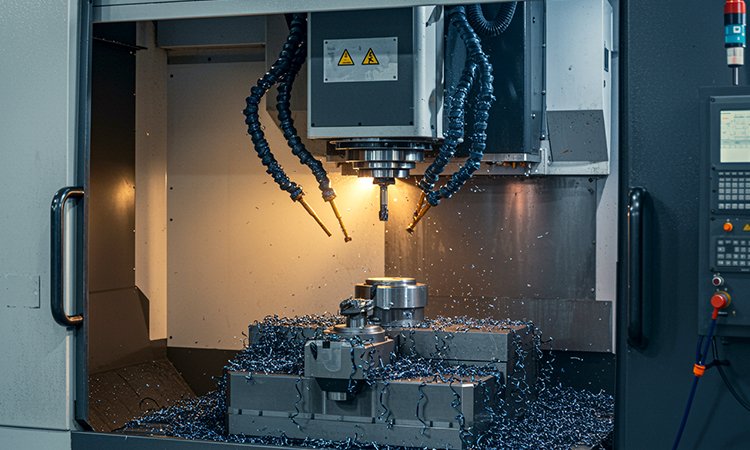
The introduction of four-axis and five-axis machining centers marked a significant milestone in manufacturing technology. These machines allow the cutting tool or the workpiece to rotate along additional axes, enabling access to multiple sides of a component in a single setup.
With five-axis machining, the cutting tool can approach the workpiece from virtually any direction. This flexibility allows manufacturers to machine complex geometries with fewer setups, significantly reducing cycle times while improving dimensional accuracy.
Why Multi-Axis Machines Matter Today
Modern engineering products—from aircraft components and automotive parts to medical implants and moulds—are becoming more sophisticated. Such components often feature complex curves, intricate contours, and tight tolerances that cannot be efficiently produced using conventional machining methods.
Multi-axis machines offer several advantages that directly impact productivity:
1. Reduced Setup Time
Since multiple surfaces of a component can be machined in a single setup, the time spent repositioning and reclamping the workpiece is minimized. This not only speeds up production but also reduces the risk of positioning errors.
2. Enhanced Precision and Accuracy
With fewer setups, there is less chance of misalignment. This ensures superior dimensional accuracy and consistency across production batches.
3. Improved Surface Finish
Multi-axis machining allows tools to maintain optimal cutting angles, resulting in smoother surface finishes and reducing the need for secondary finishing processes.
4. Shorter Production Cycles
Complex parts that once required multiple machines and several operations can now be completed in a single machining cycle.
5. Greater Design Freedom
Engineers can design more complex components without worrying about manufacturing limitations.
Transforming Productivity on the Shop Floor
The productivity gains offered by multi-axis machines are substantial. By integrating multiple machining operations into a single process, manufacturers can significantly reduce lead times and operational costs.
For instance, in traditional machining environments, a complex component may require several machines—such as milling machines, drilling machines, and turning centers. Each operation demands manual intervention and additional setups. In contrast, a multi-axis machining center can perform these operations seamlessly in one continuous cycle.
Moreover, advanced CNC programming and CAM software have made it easier to harness the full potential of multi-axis machining. Modern simulation tools allow programmers to visualize machining processes before actual production begins, minimizing errors and ensuring optimal tool paths.
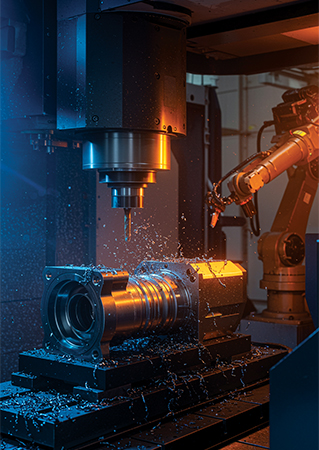
Automation is another factor that amplifies productivity. Many multi-axis machines are now integrated with robotic loading systems, pallet changers, and smart monitoring technologies. These features enable unattended machining, allowing production to continue even during non-working hours.
Applications Across High-Precision Industries
The benefits of multi-axis machining have made it indispensable across a wide range of industries.
Aerospace Industry
Aircraft components such as turbine blades, impellers, and structural parts require extremely complex geometries and high precision. Multi-axis machines are ideally suited for such applications, enabling manufacturers to meet stringent quality standards.
Automotive Industry
With the rise of electric vehicles and lightweight materials, automotive manufacturers increasingly rely on multi-axis machining for components like cylinder heads, transmission parts, and battery housings.
Medical Device Manufacturing
Medical implants and surgical instruments demand exceptional accuracy and surface finish. Multi-axis machining enables the production of intricate medical components with tight tolerances.
Tool and Die Manufacturing
The die and mould sector benefits immensely from multi-axis technology. Complex mould cavities and intricate tool designs can be machined efficiently without multiple setups.
Challenges and Skill Requirements
Despite its numerous advantages, adopting multi-axis machining is not without challenges.
Higher Initial Investment
Multi-axis machining centers are significantly more expensive than conventional machines. However, the long-term productivity gains and reduced operational costs often justify the investment.
Advanced Programming Skills
Programming multi-axis machines requires specialized knowledge of CNC systems and CAM software. Skilled programmers and operators are essential for maximizing machine capabilities.
Training and Workforce Development
Manufacturers must invest in training their workforce to operate and maintain these advanced machines effectively.
The Road Ahead for Multi-Axis Machining
The future of multi-axis machining looks extremely promising. As manufacturing industries embrace digitalization, automation, and smart factory concepts, multi-axis machines are becoming integral to modern production systems.
Technologies such as Artificial Intelligence (AI), machine learning,
and Industrial Internet of Things (IIoT) are being integrated into machining centers to enhance performance and predictive maintenance. These innovations allow manufacturers to monitor machine health, optimize cutting parameters, and prevent unexpected downtime.
Furthermore, the demand for lightweight components, customized products, and rapid prototyping is expected to drive the adoption of multi-axis machining even further.
In countries like India, where the manufacturing sector is expanding rapidly under initiatives such as “Make in India”, multi-axis machining centers will play a critical role in improving productivity and global competitiveness.
Conclusion
The advent of multi-axis machines represents a major leap forward in manufacturing technology. By enabling complex machining operations in a single setup, these machines dramatically enhance productivity, precision, and efficiency.
As industries continue to push the boundaries of design and performance, multi-axis machining will remain a cornerstone of advanced manufacturing. Companies that invest in this technology and develop the necessary skills will be better positioned to meet the demands of modern engineering and compete effectively in the global marketplace.
In the years ahead, multi-axis machining will not merely be an option—it will be a necessity for manufacturers striving for excellence in productivity and precision.