

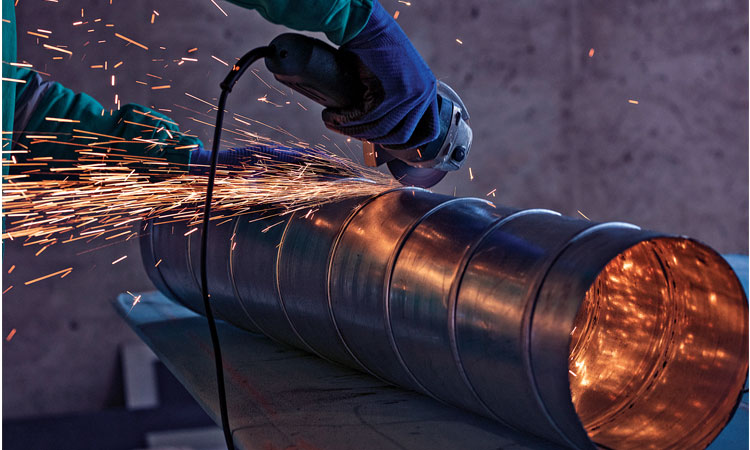
Metal cutting is a crucial process in manufacturing industries, ranging from automotive to aerospace, where precise shaping of metal parts is required. Various processes are employed based on factors such as the type of metal, thickness, required precision, cost-effectiveness, and production volume.
Here are some common metal cutting processes along with their applications and considerations for selecting the right process:
Turning
- Process: Turning involves rotating the workpiece while a single-point cutting tool removes material to create cylindrical parts. It’s typically used for creating shafts, rods, and discs.
- Applications: Turning is widely used in industries such as automotive, aerospace, and general machining.
- Selection Considerations: Suitable for high-volume production of cylindrical parts with good surface finish. Not ideal for complex shapes.
Milling
- Process: Milling uses rotary cutters to remove material from a workpiece, creating complex shapes and features. It can be done horizontally, vertically, or at various angles.
- Applications: Milling is versatile and used in industries such as mold making, aerospace, and automotive for creating slots, pockets, and complex contours.
- Selection Considerations: Suitable for both prototyping and mass production. High precision achievable with proper tooling and setup.
Drilling
- Process: Drilling creates round holes in a workpiece using a rotating cutting tool called a drill bit. It can be done using hand tools or machines.
- Applications: Widely used in manufacturing for creating holes in metal parts for assembly or fastening.
- Selection Considerations: Drill selection depends on factors such as hole size, depth, material hardness, and required accuracy. Considerations include drill bit material, coatings, & cutting parameters.
Grinding
- Process: Grinding uses abrasives to remove material and achieve high surface finish and tight tolerances. It’s used for finishing operations and precision shaping.
- Applications: Grinding is commonly used in tool and die making, aerospace, and precision engineering industries.
- Selection Considerations: Selection involves choosing the right grinding wheel, coolant, and grinding parameters based on material hardness, desired surface finish, and dimensional accuracy requirements.
Laser Cutting
- Process: Laser cutting uses a high-powered laser beam to melt, burn, or vaporize material along a predefined path. It’s precise and suitable for intricate shapes.
- Applications: Laser cutting is used in industries such as automotive, electronics, and jewelry making for cutting thin to thick metal sheets.
- Selection Considerations: Suitable for cutting complex shapes with high precision. Material thickness, type, and surface finish requirements influence the choice of laser cutting parameters.
Waterjet Cutting
- Process: Waterjet cutting uses a high-pressure stream of water mixed with abrasive particles to cut through metal. It’s non-thermal and can cut a wide range of materials.
- Applications: Waterjet cutting is versatile and used in industries such as aerospace, automotive, and architecture for cutting thick and heat-sensitive materials.
- Selection Considerations: Suitable for cutting materials that are sensitive to heat or where precision and minimal material waste are important. Considerations include abrasive type, nozzle size, and cutting speed.
When selecting the right cutting process for productivity and quality, consider the following factors:
Material Type and Thickness: Different processes are suitable for different materials and thicknesses. For example, laser cutting is ideal for thin sheets, while milling may be better for thicker materials.
Required Precision: Some processes offer higher precision than others. Consider the tolerances required for the part and the capabilities of the chosen process.
Production Volume: High-volume production may benefit from processes with faster cycle times and minimal setup, while low-volume or prototyping may prioritize flexibility and ease of setup.
Cost Considerations: Evaluate the overall cost of each process, including equipment, tooling, maintenance, and energy consumption, to ensure cost-effectiveness.
Surface Finish Requirements: Certain processes are better suited for achieving specific surface finishes. Consider the aesthetic and functional requirements of the part.
Tooling and Setup Time: Minimizing tooling changeover and setup time can improve productivity, especially for small-batch production.
Ultimately, the selection of the cutting process should be based on a careful evaluation of these factors to optimize both productivity and quality in metal cutting operations.
Role of Plasma in Sheet Metal Cutting
Plasma cutting is a thermal cutting process that utilizes a high-velocity jet of ionized gas, typically referred to as plasma, to melt and expel material from the workpiece. It’s widely used in sheet metal fabrication due to its versatility, speed, and ability to cut a variety of conductive materials, including steel, stainless steel, aluminum, copper, and brass. Here’s a detailed look at the role of plasma in sheet metal cutting:
Principle of Operation:
Plasma cutting involves passing an electrical arc through a gas, such as compressed air, nitrogen, or oxygen. This arc ionizes the gas, forming a plasma that reaches temperatures exceeding 20,000°C (36,000°F). The high-temperature plasma jet rapidly heats and melts the metal in its path, while the force of the plasma stream blows the molten material away, creating a clean cut.
Advantages of Plasma Cutting in Sheet Metal Fabrication
- Versatility: Plasma cutting can cut through a wide range of metals and thicknesses, making it suitable for various applications in sheet metal fabrication.
- Speed: Plasma cutting is generally faster than traditional methods like oxy-fuel cutting, especially for thin to medium-thickness materials.
- Precision: Advanced plasma cutting systems offer high precision and can produce intricate shapes and contours with minimal kerf width (the width of material removed by the cut).
- Portability: Plasma cutting systems are available in portable configurations, making them suitable for on-site fabrication and repair work.
- Minimal Heat Affected Zone (HAZ): Compared to oxy-fuel cutting, plasma cutting produces a narrower HAZ, reducing the risk of material distortion and preserving the material’s mechanical properties.
Applications of Plasma Cutting in Sheet Metal Work:
Metal Fabrication: Plasma cutting is used extensively in the fabrication of sheet metal components for various industries, including automotive, aerospace, construction, and manufacturing.
HVAC (Heating, Ventilation, and Air Conditioning): Plasma cutting is used to manufacture ductwork, vents, and other components in HVAC systems.
Structural Steel Fabrication: Plasma cutting is employed to cut beams, columns, and other structural components in steel construction projects.
Artistic and Decorative Metalwork: Plasma cutting is popular in artistic and decorative metalwork due to its ability to create intricate designs and shapes.
Considerations for Plasma Cutting:
- Material Thickness: Plasma cutting is suitable for a wide range of material thicknesses, but the quality of the cut may vary depending on the thickness and type of material.
- Gas Selection: The choice of plasma gas (e.g., air, nitrogen, oxygen) can affect cut quality, speed, and operating cost. Different gases are suitable for different materials and thicknesses.
- Cutting Speed and Power Settings: Optimal cutting speed and power settings depend on factors such as material type, thickness, and desired cut quality. Fine-tuning these parameters is crucial for achieving optimal results.
- Consumable Maintenance: Plasma cutting systems require regular maintenance, including replacing consumable parts such as electrodes, nozzles, and swirl rings, to ensure consistent performance and cut quality.
In summary, plasma cutting plays a vital role in sheet metal cutting by offering versatility, speed, precision, and portability. It’s widely used in various industries for fabricating sheet metal components and structures, and its effectiveness depends on factors such as material type, thickness, gas selection, & operational parameters.