
Close Menu

    Subscribe to Updates

    Get the latest creative news from FooBar about art, design and business.

    What's Hot

    Hostinger Review: Job Title Says Web Host, Resume Says a Lot More

    July 7, 2026

    AMTS 2026 to Open in Shanghai as World’s Largest Automotive Manufacturing Engineering Show

    July 2, 2026

    People and Process at the Core GROB India Manufactures Its First India Made Machine

    July 1, 2026
    Facebook X (Twitter) Instagram
    • About Us
    • Contact US
    • Advertise
    • Subscribe Magazine
    Publications Media Kit
    Facebook Instagram YouTube LinkedIn WhatsApp X (Twitter)
    Machine Tools World | Machine Tools Industry News | CNC Machine Manufacturers | Indian Manufacturing MagazineMachine Tools World | Machine Tools Industry News | CNC Machine Manufacturers | Indian Manufacturing Magazine
    Takasu
    • HOME
    • NEWS
      • Global Market
      • Latest News
      • Product Updates
    • MACHINING
      • CNC Machines
      • Cutting Tools
      • Metal Cutting
      • Metal Forming
      • EDM
      • Grinding
      • Die & Mould
      • Metalworking Fluids
    • AUTOMATION
      • Smart Automation
      • CAD/CAM
      • Machine Safety
    • METROLOGY
      • Metrology
      • Inspection Systems
      • Quality Control
    • INSIGHTS
      • People in Focus
      • Case Studies
      • Opinion
      • Company Profiles
      • Tech Innovations
      • Blogs
    • EVENTS
      • Event Coverage
      • Webinars
    • DIGITAL MAGAZINE
    Machine Tools World | Machine Tools Industry News | CNC Machine Manufacturers | Indian Manufacturing MagazineMachine Tools World | Machine Tools Industry News | CNC Machine Manufacturers | Indian Manufacturing Magazine
    Home - Case Studies - The secret of re-use of TI6AL4V in AM
    Case Studies

    The secret of re-use of TI6AL4V in AM

    MTW Editorial TeamBy MTW Editorial TeamSeptember 19, 2016Updated:July 24, 2020No Comments2 Views
    Facebook Twitter Pinterest LinkedIn WhatsApp Reddit Tumblr Email
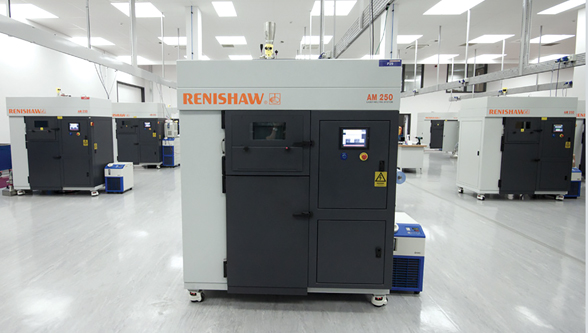
    Renishaw AM250 systems at the Stone, Staffordshire, UK facility
    Share
    Facebook Twitter LinkedIn Pinterest Email

    Metal powder re-use in additive manufacturing (AM) has been investigated using a Renishaw AM250 system and titanium alloy Ti6Al4V ELI (extra low interstitial) powder. This study is a follow-on from the encouraging results obtained in a previous study in which the chemical and physical effects of re-using metal powder through the AM250 twenty times was investigated

    Renishaw additive manufacturing systems use metal powder bed fusion to build complex components directly from CAD data. Objects are built layer-by-layer by spreading out fine metal powders and selectively melting areas with a high-power laser. Any un-melted powder remaining after a component has been built can then be re-used for another build. There is a question mark over whether there is a limited number of times that metal powders can be cycled around an AM process because chemical and physical properties are bound be changed, but to what extent?

    Multiple factors
    There are multiple factors which contribute to consistent, repeatable, and reliable AM builds, such as laser focus, filter condition, and z-axis movement – for this study we looked at feedstock (metal powder). The properties of the powder and the machine parameters that are used to process it are closely related, so the chemical and physical properties of the powder are critical. Manufacturers are naturally concerned that the condition of the powder they are processing is predictable and stable in order to have confidence in the quality of the manufactured components.

    An example of a build setup with 1. powder capture capsule, 2. tensile bars (×6) and 3. density block
    An example of a build setup with
    1. powder capture capsule, 2. tensile bars (×6) and 3. density block

    The importance of economics
    Economics is also an issue; the fine metal powder used in laser melting can be costly, so waste should be avoided. In most cases, only a small proportion of the powder that is laid down in a build process is actually melted into a component – most is left un-melted and is therefore available for re-use.

    Some of the benefits of near-net-shape manufacturing depend on such recycling. If we are forced to consider un-melted powder as contaminated and therefore unfit for re-use, then the cost of additive manufactured parts is likely to be prohibitive for many industries.

    In order to increase the robustness of the study, more tensile bars were built for each run; three to be tested with an ‘as built’ surface and three machined. Powder capture capsules and density blocks were also built.

    A single batch of powder was cycled through Renishaw’s additive manufacturing process for a total of 38 builds until there was no longer enough powder remaining for a test sample height. Powder was analysed for oxygen and nitrogen content, Hall flow, particle size distribution (PSD) and density. There was found to be a small but steady increase of both oxygen and nitrogen concentrations in the powder as the build number increased. At around 16 builds the oxygen level started to fluctuate around the upper limit for the specification.

    Nitrogen stayed within the material specification maximum limit as well as the more stringent lower allowable 300 ppm stated for some other grades. It is likely that under normal running conditions with regular topping up of the silo with virgin powder these levels will remain within the boundaries of the ELI specification.

    Both levels stayed well within the boundaries of the grade 5 specification. PSD values shifted very slightly upwards due to gradual loss of smaller particles resulting in an increase in Hall flow speed. Upper tensile strength was found to be higher for the machined, compared to the rougher ‘as built’ tensile bars.

    General conclusions
    The changes observed over the period of the two studies do not seem to affect the way that the AM system functions with the powder, therefore the material parameters are still valid for the powder from start to end.

    There was a general increase in oxygen and nitrogen levels observed over both studies. These impurities are most likely picked up by particles close to the weld pool which are heated but not melted. The levels of both impurities do eventually reach the maximum allowable for ELI grade Ti6Al4V, however they stay well within the specifications for the more widely used grade 5 Ti6Al4V.

    It is likely that under a normal running scenario in which the silo is topped up with virgin powder at regular intervals the levels of oxygen and nitrogen would stay within acceptable boundaries as the new powder blends with the used. This however will require backing up with data.
    Flow improves as the number of builds increases, this is most likely due to narrowing of the PSD by gradual removal of smaller particles. Powder morphology does not significantly change over the entirety of the study. Occasional misshapen and agglomerated particles occur within the bulk but at a very low occurrence, and the effect does not seem to be cumulative.

    A re-use cycle 1. Build, 2. Remove build plate, 3. Sieve un-melted powder, 4. Replace sieved powder into silo at the top of the machine.
    A re-use cycle 1. Build, 2. Remove build plate, 3. Sieve un-melted powder, 4. Replace sieved powder into silo at the top of the machine.

    Observations
    The observations gained from this study suggest that there is no requirement to dispose of un-melted Ti6Al4V after it has been cycled around the AM250 system after a limited number of times. This does however depend on the specific requirements of the component material properties, in which case a stringent blending regime may be required for traceability.

    The effects of powder re-use will potentially be different for other materials in terms of physical property effects, however because titanium has a high propensity to pick up interstitial impurities, the pickup rates observed can be thought of as a ‘worst case’ for commonly used metal AM powders.

    Renishaw logo

    Post Views: 285
    Additive Manufacturing Renishaw Metrology Systems Ltd
    Share. Facebook Twitter Pinterest LinkedIn Tumblr Telegram Email
    MTW Editorial Team

      Related Posts

      The Cutting Edge: How Wenzel Metal Spinning Enhances Efficiency and Precision with Prima Power’s 5-Axis Laser Technology

      May 29, 2026

      Development of an Indigenous Tribo-Simulator – A Smart Tool for Wear and Friction Characterisation

      February 9, 2026

      Revolutionizing Tablet Compression Tooling –SMT’s PVD Chromium Nitride Coating Replaces Hard Chrome in the Pharmaceutical Industry

      November 25, 2025
      Leave A Reply Cancel Reply

      Top Posts

      Machine Tools World August 2025

      August 25, 20252,468

      3D Printing: India’s Next Manufacturing Frontier

      June 14, 2025142

      Vertical and Horizontal Milling Machines: Key Points of Difference

      August 7, 2021190

      Gravity Die Casting and the Importance of Die Coats

      June 29, 202397
      Don't Miss
      Event Coverage

       B2B World Summit & Awards 2026 in Pune

      By MTW Editorial TeamJune 19, 20266

      Artificial intelligence has swiftly progressed beyond pilot projects and proof-of-concept discussions. AI-led go-to-market strategies, revenue…

      LIVE from INTEC 2026 | CODISSIA, Coimbatore

      June 19, 2026

      GMT Engineers Showcases Advanced Laser Cutting Solutions for Smart Manufacturing

      June 15, 2026

      FFG Showcases Advanced CNC Machining Solutions for the Next Generationof Manufacturing

      June 13, 2026
      Stay In Touch
      • Facebook
      • Twitter
      • Pinterest
      • Instagram
      • YouTube
      • Vimeo

      Subscribe to Updates

      Get the latest creative news from SmartMag about art & design.

      About Us
      About Us

      MACHINE TOOLS WORLD magazine is a monthly machine tool industry magazine in India since from last 10 years, catering to Indian & global machine tools, CNC machine manufacturers, Cutting tools, Metal Forming Machine Manufacturers, CAD-CAM, Metrology, Lubricant, Grinding Machine Players.

      Facebook X (Twitter) Instagram YouTube LinkedIn WhatsApp
      Our Picks

      AMTS 2026 to Open in Shanghai as World’s Largest Automotive Manufacturing Engineering Show

      July 2, 2026

      Cutting Tool Industry Keeps in Step with Technological Advancements Worldwide

      June 30, 2026

      B2B World Summit Pune 2026 Explores the New Formula for Enterprise Growth

      June 25, 2026

      Subscribe to Updates

      Get the latest news, product insights, and expert opinions from the world of machine tools and manufacturing, delivered straight to your inbox.

      © 2026 MachineToolsWorld.
      • Terms & Conditions
      • Privacy Policy
      • Disclaimer Policy

      Type above and press Enter to search. Press Esc to cancel.

      Prisma Banner