

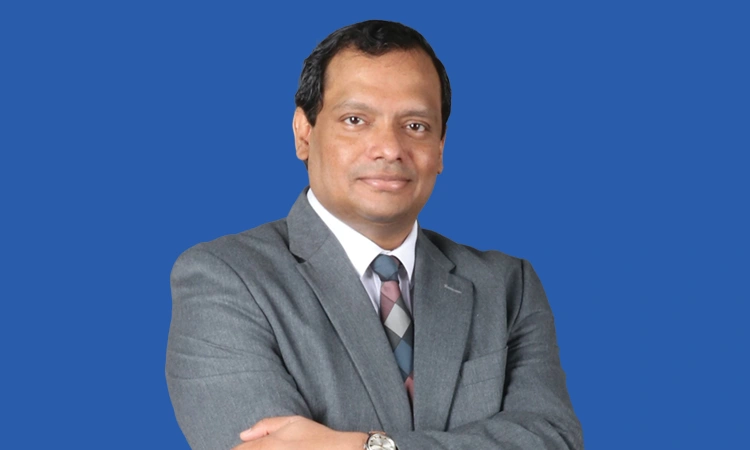
With an impressive 46-year legacy of engineering expertise, Mechelonic Engineers has carved a distinctive niche in India’s resistance welding industry through technological innovation, an extensive product portfolio and an unwavering commitment to quality. From precision microspot welders to high-capacity rail track welding machines, the company offers solutions that cater to an exceptionally diverse spectrum of industrial applications. Spearheaded by its commitment to R&D, energy efficiency and customer-centric engineering, Mechelonic continues to strengthen its leadership while gearing up for emerging opportunities in EV manufacturing, metro rail, power generation and industrial automation. In this feature, Gabin Kattukaran, Director, Mechelonic Engineers, shares the company’s remarkable journey, technological strengths and vision for the future. Excerpts:
Q. Established in 1980, Mechelonic Engineers has built a strong reputation in resistance welding technology. Could you take us through the company’s journey, its major milestones and the strategic initiatives that have shaped its evolution into a comprehensive resistance welding solutions provider?
Established in 1980, Mechelonic Engineers has come a long way in the resistance welding industry. What started as a focus on manufacturing resistance welding machines has gradually grown into a business offering complete welding solutions, including specialised machines, automation systems and customised equipment for different industrial applications.
Over the years, our growth has come from understanding customer requirements, adapting to changing technologies and continuously improving what we offer. We have invested in developing our technical capabilities, expanding our product range and building a team with the experience and knowledge needed to take on challenging applications. Our approach has always been to find practical and reliable solutions to the welding requirements of our customers.
Resistance welding in India has come a long way, with improvements in machine design, control systems and automation playing an important role in its development. Mechelonic has been part of this journey for over four decades.
One of the biggest strengths of Mechelonic Engineers is the range of machines and applications we cater to. With more than 45 years of experience, we have developed solutions for requirements ranging from small and precision-based applications to large industrial welding operations.
Our product range includes everything from compact table-top micro-spot welders to massive 35-ton machines used for rail track welding. This range reflects our ability to handle very different welding requirements and develop machines to suit specific applications.
We serve a wide range of industries, which includes Automotive, Electrical Switchgear, Defence, Power Generation, Railways, Nuclear power, Packaging, Fencing and Construction and Steel. Our experience across these sectors has helped us understand the different challenges involved in each application and develop solutions accordingly. We have built the ability and reputation of delivering machines & solutions that no one else in the Indian market can. We have also brought to market many designs and solutions that have become de facto industry standards.
Today, our focus remains on expanding our capabilities, adopting new technologies and offering better solutions that meet the practical requirements of industry. We believe our experience, wide product range and ability to customised machines are what set us apart.
At Mechelonic, we continue to follow a simple philosophy: delivering Bigger, Better, Faster and More Welding Solutions.
Q. Mechelonic offers an extensive range of resistance welding equipment, including Spot, Projection, Seam and Flash Butt Welding Machines, besides specialised and special-purpose machines. Could you elaborate on your product portfolio, distinguishing technological features and the key applications they address?
Mechelonic Engineers offers a wide range of resistance welding machines and customised welding solutions for different industrial applications. Over the years, we have expanded our capabilities beyond conventional welding machines to include special-purpose machines, automation systems, welding controls, transformers and complete turnkey solutions.
Our main product range includes Spot, Projection, Seam and Flash Butt Welding Machines. Each category caters to different welding requirements and is available in various configurations depending on the component, production process and application.
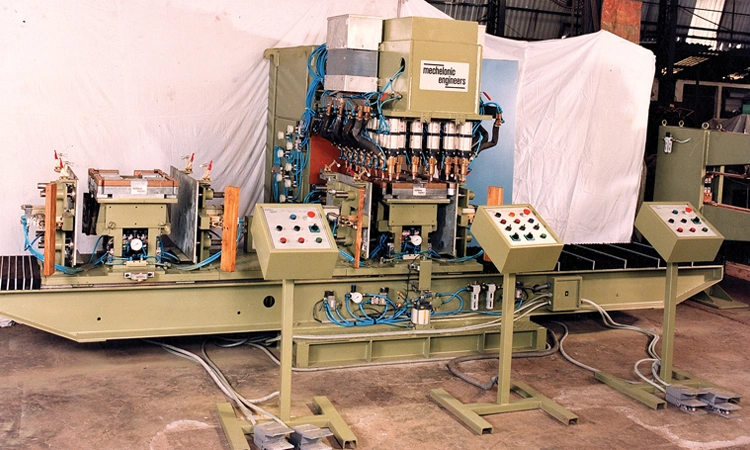
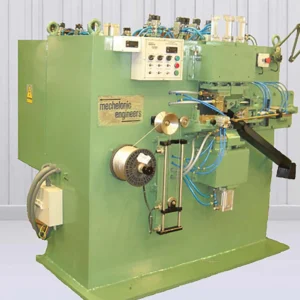
Our Spot Welding range includes standard, bench-mounted, and micro-head machines. These are used across industries for joining sheet metal components, from small precision parts to larger assemblies. Similarly, our Projection Welding Machines are widely used for welding nuts, bolts, fasteners, brackets and other components where strong and repeatable joints are required, particularly in production environments.
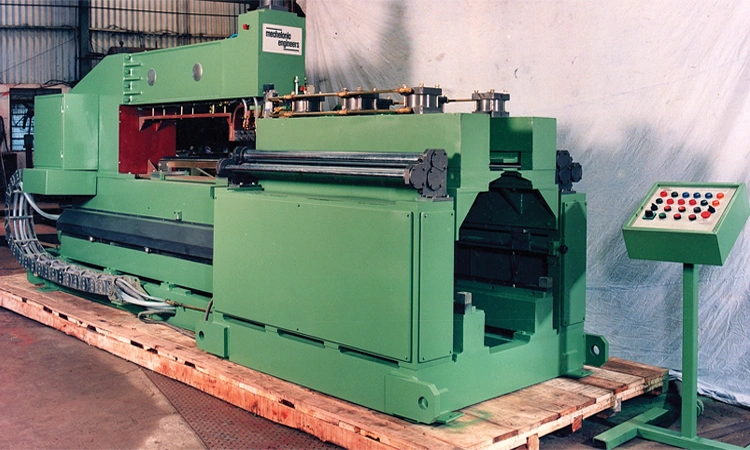
In Seam Welding, we offer longitudinal, circumferential machines. These are used in applications such as fuel tanks, automotive components and packaging, where continuous and uniform welds are essential. We also make a number of seam welders for cold rolling mills.
Flash Butt Welding is another important area of our expertise. Our machines are used for joining metal sections, bars, rails and other components, with pneumatic, hydraulic and servo-hydraulic operating systems available depending on the application. We also have a dedicated range of Rail Flash Butt Welding systems developed for Indian Railways, meeting the relevant RDSO requirements.
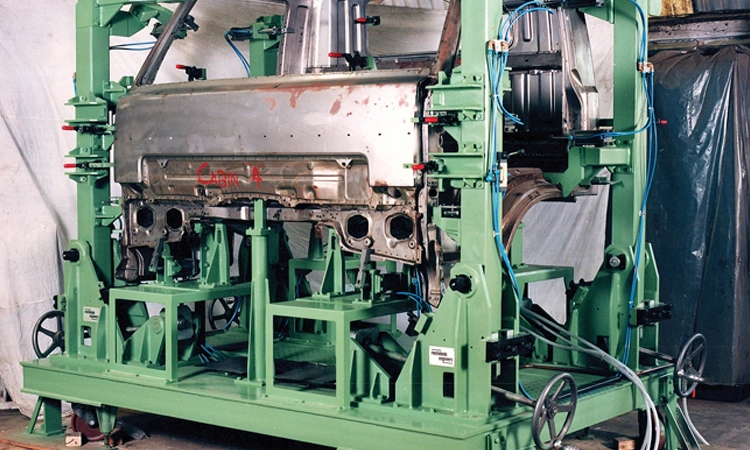
Apart from these standard machine categories, we manufacture several specialised machines to meet specific industry requirements. These include Brake Shoe Welding Machines, Container Side Seam and Seam Welders, Wire Mesh Welding Machines, Copper Flexible Link Solidification Machines and Braid Compacting Machines, among others. These machines are developed based on the component design, production process and specific requirements of each customer. The development of Foil Solidification for Switchgear & EV is one such.
Another important part of our business is the development of welding controls and transformers. We offer Thyristorised, MFAC and MFDC control systems, along with microprocessor-based and inverter-based welding controls. These technologies help regulate welding parameters and maintain consistent weld quality across different production conditions.
Our engineering capabilities also allow us to take up special-purpose machine development and customised automation projects. Depending on the requirement, we integrate welding equipment with fixtures, tooling, and material handling systems. This allows us to offer complete solutions, from an individual welding machine to an integrated production system.
Our machines and solutions cater to a wide range of industries, including Automotive, Aerospace, Railways, Steel Mills, Nuclear Power Generation, Electrical Switchgear, White Goods, Packaging, and Fencing and Construction.
What sets Mechelonic apart is the breadth of our product range and our ability to handle different welding applications under one roof. We do not limit ourselves to standard machine configurations. We work closely with customers to understand their requirements and develop machines and systems that suit their manufacturing processes. Our focus is on providing reliable equipment, consistent weld quality and practical solutions that help customers improve their production capabilities.
In the last decade we have introduced the Peripheral Seam Welder which is specially designed for two wheeler fuel tanks. Further, we have come up with a range of machines for the production of Nuclear Fuel Machines to meet stringent requirements of the aerospace industry.
Q. One of Mechelonic’s strengths is its ability to develop application-specific machines and sophisticated welding systems. How do you approach the design and development of customised solutions to address complex manufacturing challenges, specialised processes and high-volume production requirements?
At Mechelonic Engineers, customised machine development starts with understanding what the customer actually needs from the machine. Every manufacturing process is different, and a standard machine may not always be suitable for a particular component or production requirement. In such cases, we work on developing a solution around the customer’s specific application.
The very first step is to understand the component, material, production quantity, required cycle time and quality expectations. We also study the customer’s existing process to identify the areas that need improvement. Based on this, our engineering team decides on the suitable welding process, machine design, tooling, controls and level of automation.
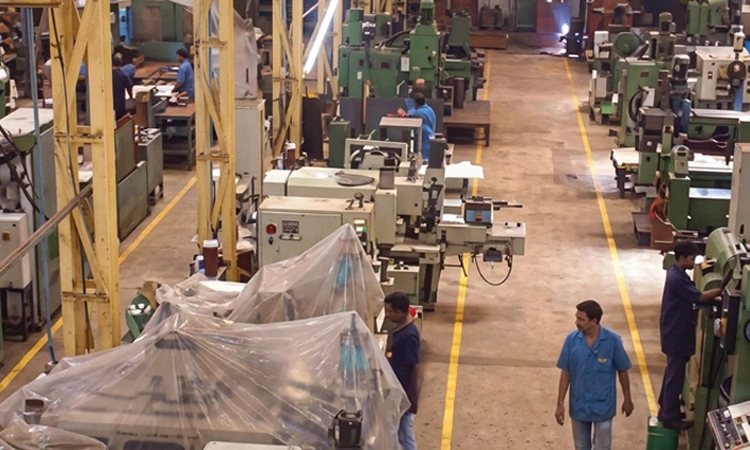
Having engineering and manufacturing facilities in-house gives us the flexibility to develop machines for a wide range of applications. Our work can involve modifying an existing machine, developing a special-purpose welding machine or building a complete automated production line. Depending on the project, we integrate mechanical systems, electrical controls, fixtures, material handling, robotics and inspection systems.
For us, achieving consistent weld quality is just as important as meeting production targets. Our machines can be equipped with PLC-based automation, microprocessor-based welding controls, programmable welding parameters and quality monitoring systems. These help maintain repeatability, reduce manual intervention and ensure that the machine performs consistently during production.
Over the years, we have worked on specialised applications across several industries. These include Brake Shoe manufacturing, Tin Container production, Welded Wire Mesh, Electroforged Gratings, Automotive components and Rail Track welding. Each application comes with its own challenges, and our experience across these areas helps us understand the process and develop suitable solutions.
We also look beyond the immediate requirement while designing a machine. Factors such as ease of operation, maintenance, machine reliability and scope for future modifications are considered during development. A machine should not only meet today’s production needs but should also remain practical and dependable over the years.
Our aim is to take responsibility for the welding and automation requirements of a project, rather than simply supply a machine. By combining our experience in resistance welding with in-house engineering, manufacturing and automation capabilities, we work towards providing solutions that fit the customer’s production process and deliver reliable performance over the long term.
 Q. How important are research and development, indigenous engineering and continuous technology upgrades in your business strategy? What are the recent technological advancements in your welding machines, controls, transformers and inverter-based power sources?
Research and development, in-house engineering and continuous improvement have been an important part of Mechelonic Engineers since its establishment in 1980. The resistance welding industry has changed considerably over the years, with new control technologies, automation and changing production requirements influencing the way machines are designed and manufactured. Keeping pace with these developments has always been an important part of our work.
We have consistently focused on developing our own engineering capabilities rather than depending entirely on standard or imported technologies. This has helped us build expertise in resistance welding machines, controls and transformers, while giving us the flexibility to develop customised solutions for different applications. Having these capabilities in-house also makes it easier to modify machines, address specific technical requirements and provide support throughout their operating life.
Welding control technology is one area where we have made considerable progress. Our range includes microprocessor-based Thyristorised, MFAC and MFDC welding controls. These systems help regulate welding parameters and maintain consistent weld quality. Depending on the configuration, they offer features such as programmable welding schedules, current monitoring, voltage compensation, closed-loop feedback and fault diagnostics. Such features are particularly useful in production environments where maintaining consistent weld quality across large quantities of components is important.
We have also developed capabilities in medium-frequency inverter-based welding technology, including MFAC and MFDC systems. These technologies offer better control over the welding process, faster response and improved energy utilisation. They are particularly useful where production speed, accuracy and repeatability are important.
Our work also extends to the design and development of welding transformers. We pay attention to their electrical performance, cooling, thermal management and suitability for continuous industrial use. Along with this, we keep working on improvements in machine construction, mechanical systems and the integration of welding controls to make our equipment more reliable and easier to operate.
Automation is another area where we continue to expand our capabilities. Our machines can be integrated with automatic feeding, placement and robotics controlled by PLC/CNC systems. We also supply Data acquisition and weld monitoring. Depending on the customer’s requirements, we also incorporate customised automation to improve process control, production monitoring and traceability.
For us, R&D is not only about developing a completely new machine or introducing a new technology. A lot of improvement comes from making existing machines more efficient, simplifying their operation, reducing downtime and finding better ways to achieve consistent weld quality, while increasing the productivity of the machine. Feedback from customers and the practical challenges encountered on the shop floor also help us identify areas where our machines and processes can be improved.
Going forward, we will continue to invest in our in-house engineering capabilities, develop our weld controllers further, welding technologies and expand our automation solutions. Our focus remains on combining our experience in resistance welding with newer technologies to develop machines that meet the changing requirements of modern manufacturing.
Q. With manufacturers increasingly embracing Industry 4.0, robotics and automated production lines, how is Mechelonic integrating automation, intelligent controls and process monitoring into its welding solutions? What role will smart welding systems play in the factories of tomorrow?
Automation has become an important part of manufacturing, and at Mechelonic Engineers, we have been integrating automation with our resistance welding machines for several years. As production requirements become more demanding, customers are looking for machines that can do more than just perform a welding operation. They need systems that can handle multiple operations, maintain consistent quality and reduce manual intervention.
The fruits of our efforts can be seen in the number of Mechelonic Engineers designs that have became defacto industry standards.
As customers have become increasingly quality conscious, traceability of production has become more important. Most of the PLC based machines are Industry 4.0 compliant. We have implemented data monitoring systems in the weld controllers and also with PLC with HMI based systems. Mechelonic engineers have developed and supplied a number of Data acquisition systems with their machines. The data stored on a server for further analysis. Machines are also equipped with a monitoring system for maintenance and early warning systems for parts replacement and dressing. Warning and alerts are generated at multi level.
Our automation philosophy incorporates a 3-step guide –
1 – Improve product quality
2 – Improve productivity
3 – Reduce Manpower cost
Depending on the application, we integrate PLC and HMI-based controls, automatic material handling, multi-station welding arrangements and robotic systems. In some projects, this involves automating a single welding operation, while in others, we develop complete production lines where multiple processes are integrated into one system. The objective is to make the production process faster, more consistent and less dependent on manual operations.
Welding controls and process monitoring are equally important in this regard. Our microprocessor-based and inverter-based controls allow better regulation of welding parameters. Depending on the machine and application, we can also incorporate sensors, feedback systems, programmable welding schedules, fault detection and data recording. These features help monitor the welding process, identify variations and maintain the required quality standards during production.
We have applied these capabilities across several specialised applications. Our Rail Flash Butt Welding Systems, for example, incorporate automatic rail alignment, process parameter monitoring and data recording, allowing important welding parameters and joint details to be maintained for quality assessment. In the Nuclear Fuel industry, our specialised systems integrate automated welding operations, material handling and monitoring arrangements to meet specific process and quality requirements.
Looking ahead, we see greater integration of machines with factory-level systems. The ability to collect production data, monitor machine performance, maintain process records and identify problems at an early stage will become increasingly important. This will help manufacturers improve traceability, plan production better and reduce unplanned downtime.
We also see opportunities in connecting welding machines with broader manufacturing systems to support production monitoring, quality analysis and predictive maintenance. However, the level of automation needs to be practical and suited to the customer’s actual production requirements.
At Mechelonic, our focus is on bringing together resistance welding, machine automation and process monitoring to develop complete manufacturing solutions. We believe automation should not simply add complexity to a machine; it should make the production process more reliable, efficient and easier to manage.
Q. Your solutions cater to diverse industries, including automotive, aerospace, defence, railways, nuclear fuel, electrical switchgear, steel mills and packaging. What are the specific technological challenges in these sectors, and how does Mechelonic address their stringent requirements for precision, consistency, reliability and productivity?
Mechelonic Engineers works with customers across a wide range of industries, from automotive and electrical manufacturing to railways, defence and heavy engineering. Each industry has different welding requirements, and the challenges can vary considerably depending on the component, material and production process. Our experience across these sectors has helped us develop machines and customised solutions for a variety of applications.
The Automotive industry is largely driven by production volumes, cycle times and consistent weld quality. Manufacturers need machines that can handle repetitive operations without compromising on quality. Our Spot, Projection and Seam Welding Machines, along with special-purpose machines and robotic welding systems, cater to applications involving different automotive components and assemblies.
In Aerospace and Defence, the requirements are quite different. These applications often involve specialised materials and components where precision, controlled welding parameters and repeatability are particularly important. We develop application-specific machines with dedicated tooling, programmable welding controls and process monitoring to meet these requirements.
The Railway sector is another important area of our expertise. Rail welding requires careful control of the process, accurate alignment and reliable joints that can withstand demanding operating conditions. Our Rail Flash Butt Welding Systems are developed for joining railway tracks and incorporate specialised mechanical and hydraulic systems, welding controls, process monitoring and data recording facilities. These systems are designed to meet the relevant Indian Railways and RDSO requirements.
In Electrical Switchgear and Power Generation, welding quality directly affects the performance and reliability of electrical components. We cater to applications involving busbars, electrical contacts, copper flexible links and other conductive components through our Spot and Projection Welding Machines, Copper Flexible Link Solidification Machines and customised welding systems.
For Steel Mills, Fencing and Construction, the focus is generally on heavy-duty machines capable of handling continuous and repetitive production. Our Welded Wire Mesh and Electroforged Grating Welding Systems are developed for these applications, with provisions for material feeding and multiple welding operations to support higher production requirements.
In the Packaging industry, particularly tin container manufacturing, speed and uniformity are essential. Container bodies require consistent side seams and leak-proof joints, even at high production volumes. Our Container Side Seam Welding Machine, along with specialised container manufacturing systems, are developed to handle these requirements.
Working across these industries has given us a better understanding of the practical challenges faced by manufacturers. We do not approach every requirement with the same machine or configuration. We study the application, understand the production process and then decide on the appropriate welding technology, tooling, controls and automation.
We also consider what happens after a machine is installed. Its reliability, ease of maintenance, availability of technical support and ability to perform consistently over the years are equally important. Our engineering and manufacturing capabilities, along with installation, commissioning and after-sales support, help us stay connected with customers beyond the initial supply of equipment.
Ultimately, our experience across such varied industries comes from continuously working on different welding applications and finding ways to address their specific requirements. This combination of resistance welding knowledge, in-house engineering and customised machine development remains one of our key strengths.
Q. In today’s competitive manufacturing environment, customers expect superior weld quality, higher throughput and lower operating costs. What engineering and technological measures do you incorporate to enhance process consistency, minimise rejection rates, optimise energy consumption and reduce the total cost of ownership?
At Mechelonic Engineers, we consider quality, productivity and energy efficiency right from the machine design stage. A welding machine needs to do more than produce a strong weld. It should deliver consistent results, perform reliably during continuous production and help customers achieve their manufacturing targets.
Welding control plays an important role in maintaining weld quality. Our microprocessor-based welding controls offer features such as constant current regulation with closed-loop feedback, voltage compensation, programmable welding schedules and alarm systems. These help maintain the required welding parameters and minimise variations during production. We also provide current monitoring, weld counters and data recording facilities to help operators monitor the process and maintain quality records.
Productivity is another important consideration in machine development. We look at ways to reduce unnecessary operations, improve cycle times and make machines suitable for the required production volumes. Depending on the project, we integrate PLC and HMI-based controls, customised fixtures, multi-station arrangements and automatic material handling systems. These features help reduce manual intervention, improve repeatability and increase production output.
Energy consumption is also considered while selecting and configuring the machine. Transformer capacity, electrical configuration, welding parameters and cooling arrangements all have a bearing on machine performance and power utilisation. We work on selecting the right combination for each application so that the machine delivers the required weld quality without unnecessary energy consumption. Our three-phase DC and medium-frequency inverter-based systems provide additional options for applications with specific power and performance requirements.
We also believe that the overall performance of a machine should be judged over its operating life, not just at the time of installation. Machine construction, component quality, cooling arrangements and ease of maintenance all contribute to long-term reliability. Along with new machines, we undertake maintenance, refurbishment and upgradation work to help customers maintain existing equipment and extend its useful life.
Another important part of achieving good results is understanding the welding application itself. Before finalising a machine or its settings, welding trials and parameter studies can help establish the right conditions for a particular component and material. This is especially important where customers are dealing with new components, different material thicknesses or specific quality requirements. Getting these parameters right helps reduce rework, rejection and unnecessary production losses.
Our approach is to consider the complete operating requirements of a machine, from welding quality and production speed to energy consumption and maintenance. By combining suitable welding technology, reliable machine construction, automation and technical support, we aim to help customers improve production efficiency while keeping their overall operating costs under control.
Q. Beyond machine manufacturing, Mechelonic undertakes turnkey projects, welding plant engineering, installation, commissioning and maintenance services. How does this integrated approach help customers improve production efficiency, equipment uptime and lifecycle performance?
At Mechelonic Engineers, our work does not end with manufacturing and supplying a machine. Many customer requirements involve setting up an entire production process, where welding machines need to work alongside other equipment, material handling systems and automation. We undertake such projects right from the initial engineering and planning stages through manufacturing, installation and commissioning.
Our turnkey project capabilities include complete production lines and manufacturing plants, covering welding equipment, auxiliary machines, material handling, power management and automation systems. We look at how the different machines and operations will work together so that the overall production process runs smoothly and efficiently.
Over the years, we have executed projects across several specialised industries. In the Railway sector, we undertake turnkey Rail Flash Butt Welding Plant projects, which include the welding machine and associated upstream and downstream equipment required for plant operations. Our installations at North Eastern Railway, South Central Railway and Bhilai Steel Plant are examples of our experience in this area.
In the Tin Container industry, we provide semi-automatic and fully automatic manufacturing plants incorporating side seam welding machines, feeding systems, forming equipment and material handling arrangements. We also develop integrated production systems for Welded Wire Mesh and High Security Fencing, covering wire feeding, welding and related operations.
Our capabilities extend to high-power automatic Electroforged Grating Welding Systems with integrated power management and material handling, as well as multi-station Heat Exchanger Manufacturing Lines with conveyor-based material movement. Each project involves different equipment configurations and production requirements, which are addressed during the engineering and planning stages.
One of the advantages for customers is having a single engineering partner responsible for coordinating the different parts of a project. This helps avoid compatibility issues between machines, simplifies project execution and allows the production layout and operating sequence to be planned together from the beginning.
Our association with customers continues even after the plant is commissioned. We provide technical assistance, spare parts, maintenance and Annual Maintenance Contracts to support the equipment during its operating life. Preventive maintenance and timely servicing also help reduce unexpected breakdowns and keep production running with minimal interruptions.
For us, a project is not complete simply because the machines have been installed and handed over. The equipment must perform reliably under actual production conditions, and customers should have access to the technical support they need over the years. This is how we approach turnkey projects and build long-term relationships with our customers.
Q. How would you assess the current demand for advanced resistance welding technologies in India and overseas? Which industry segments and geographical markets offer the most promising growth opportunities, and what are your plans to strengthen Mechelonic’s market presence?
Our Current focus is on the domestic market. What we see today is an increasing dependence on government spending. We see an overall increase in infrastructure related spending and also a push in domestic capacity building for defence . We also see private industries that manufacture for export doing well.
We are still waiting for a boost in domestic consumption that in turn will increase demand for local manufacturing. There are also sector specific growth areas within each industry segment we generate in.