

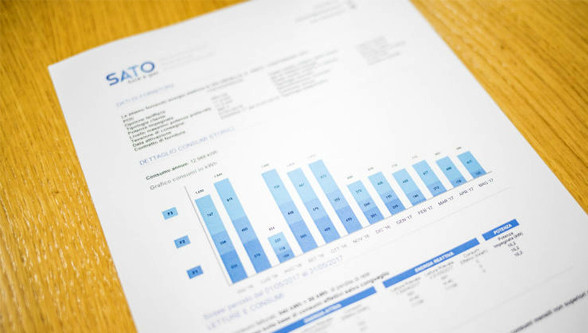
Applying big data analytics to your business — any size of business, really — means leveraging data your company already generates to improve workflows you already perform. The goal is to predict future results more accurately, use your time, labor, capital and other resources more effectively and generally safeguard your future revenue against unknown disruptions as much as possible.
This process is a type of fact-based decision-making based on knowledge of what happened in the industry — and in the company in question — in the past. In some cases, it can draw on data from across your whole enterprise or even from across the global economy.
Sound impossible? It’s not. In the marketing industry, analytics can help marketers make selling decisions based on historical and current trends. In procurement, analytics can help manage spending, customer and vendor relationships, prediction and response to risk and more.
Why Should Industry Managers Incorporate This Technology?
One company specializing in customer relationship management software realized a boost in customer retention of between 10 and 15 percent after they began applying predictive analytics to their work. The idea is that statistical models can run in the background of your client management software and predict with surprising accuracy whether each customer is likely to make a purchase, slow down their spending or even take their business elsewhere.
This process is called “churn analysis,” and it doesn’t stop by giving you a warning that some of your partners or suppliers might be making changes. It can also help you identify which type of outreach or promotion might best convince them to stay based on what’s worked in the past. It’s a big part of the marketing and procurement worlds, but it’s just one small piece of big data analytics. So what else can analytics do for your procurement processes?
Broadly speaking, the most useful analytical tools are ones that help your company make use of data you’re already gathering. We’re talking about things like:
- Historical and up-to-the-minute spending data for your company and partners
- Contract data and other information related to your supplier and customer relationships
- External sources of data, including market prices over time and by geography as well as general supplier and industry trends
But no matter what form it takes, the goal is to always make better decisions for the company. It’s about leveraging data you already produce and making it visible enough to become actionable. You get to pivot from reactionary business decisions to being proactive.
How Do You Actually Use It?
There are multiple techniques used by analytics software and digital commerce tools. Each one helps us make sense of our data and draw meaningful conclusions from it.
The simplest one is just called “RFM” — “recency, frequency and monetary.” It’s the most basic type of analysis and often doesn’t require specialized tools. Unfortunately, while helpful, it’s not truly predictive. For that, you need an analytical engine that draws on Bayesian probability models or logistic regression rather than the surface-level “how much” and “how often” analysis offered by RFM.
That’s the first step in taking advantage of big data analytics for your company: finding out which types of tools are going to deliver meaningful results. It means research, for better or worse. And it means asking the important questions when you’re considering partnering with a data firm or a company that sells CRM or analysis software for business.
Let’s look at this another way, naming several business goals that any procurement-heavy company would likely be interested in and identifying how analytics can help out:
- Reduce errors: In the medical community, analytics and predictive modeling makes patient data more accessible and reduces the likelihood of a misdiagnosis or a nurse or doctor missing something critical. Procurement isn’t that different: Big data can help your whole organization draw information and conclusions from the same pool of information.
- Eliminate or reduce losses: What does your business procure? Does the work you do require time-sensitive material handling or involve perishable goods? Your big data platform can also integrate remote monitoring technologies and sensors to track the condition, location and likely departures and arrivals of goods-in-transit, no matter where in the world you buy from or sell to, to reduce spoilage or misplaced shipments.
- “Score” customers on loyalty and likely retention: Customer relationship management software with analytics built in can create hierarchies of your customers and assign them a score based on multiple factors, including their performance in their larger industry and their contribution (or lack thereof) to your own profitability.
- Navigate the risks of your industry more confidently: The risks to your company and industry vary from place to place, but one of the advantages of analytics lies in becoming better prepared for the unforeseen. Think about the risk to our procurement networks and supply chains posed by natural and unnatural disasters. Other areas of risk include material shortages, unpredictable pricing fluctuations and lapses in compliance. Analysis in big business can help you plan ahead and make better decisions based on likely future scenarios.
There’s so much opportunity here. Step one for procurement managers is to be honest about the shortcomings and opportunities in their business right now. So what problems have been dogging you? Where do you see opportunities to apply some machine-facilitated prognostication? If you want to better understand your revenue stream and your place in the industries you serve and rely on, analytics is your ticket.
Here’s one last example of how to apply analytics to solving your problems.
We’re in the middle of a practically unprecedented global electronics components shortage. It’s the sort of situation that has lots of purchasing managers wishing they’d started using modeling and analytical tools months or even years ago so that they could begin plotting their future over the long-term, including making strategic purchases of certain components or raw materials to avoid bottlenecks and industry-wide problems that will trip up their competitors.
That makes big data a real competitive advantage for any company — and an encouraging sign that the work we perform in the future, and the resources we procure to perform it, will be in better hands than ever. Even if some of those “hands on deck” are computer algorithms.
Article by —

Megan Ray Nichols
Freelance Science Writer
nicholsrmegan@gmail.com
www.schooledbyscience.com/about